
Fixing Water Damage Caused by a Clogged AC Condensate Line
Water pooling around your HVAC unit isn’t just an inconvenience—it’s a warning sign of potential structural damage and mold growth. In Richmond’s humid climate, a clogged AC condensate line can release gallons of water into your home within hours, saturating drywall, warping hardwood floors, and creating perfect conditions for toxic mold spores to multiply. How to Get Rapid Water Extraction in the Museum District.
The good news? Quick action can prevent thousands in secondary damage. This guide walks you through immediate steps to stop the leak, identifies when you need professional restoration versus just an HVAC repair, and explains how Richmond’s unique climate factors accelerate water damage if left untreated. EPA mold information.
Immediate Steps When You Discover AC Water Damage
Before calling anyone, take these emergency actions to minimize damage to your Richmond home: 24/7 Emergency Water Removal Services in Richmond VA.
- Turn Off the System
Locate your thermostat and switch the AC to “off” immediately. This prevents the unit from continuing to produce condensation while the drain line is blocked.
- Clear Standing Water
Use towels, mops, or a wet vacuum to remove visible water. Focus on areas around the unit, but check nearby flooring for hidden moisture that may have spread. Commercial Water Damage Restoration for Downtown Richmond Businesses.
- Check the Air Filter
A dirty filter can cause the evaporator coil to freeze, leading to overflow when it thaws. Replace it if it’s clogged or hasn’t been changed in over 60 days.
- Inspect for Visible Blockages
Look for obvious debris in the drain pan or around the condensate line exit point. Richmond’s pollen season often introduces organic material that can clog these systems.
If water has spread beyond a small area or you notice water stains on walls or ceilings, you’re dealing with more than a simple HVAC issue. The moisture has likely penetrated building materials where it continues to cause damage even after the leak stops. Water Damage Restoration Colonial Heights.
Common Causes of AC Condensate Line Clogs
Understanding what causes these clogs helps prevent future incidents and explains why Richmond homes face unique challenges:
| Cause | Symptoms | Richmond-Specific Factors |
|---|---|---|
| Algae and Mold Growth | Black slime in drain pan, slow drainage | Richmond’s 80%+ summer humidity accelerates biological growth in condensate lines |
| Dirt and Debris | Visible particles in drain pan, gurgling sounds | Pollen from Virginia’s abundant trees and flowering plants enters outdoor units |
| Ice Formation | Water only appears after system shutdown | High humidity causes coils to freeze more readily, especially with dirty filters |
| Pipe Damage or Separation | Water appears far from unit, inconsistent leaking | Clay soil expansion in Richmond’s humid climate can shift underground pipes |
Richmond’s climate creates perfect conditions for condensate line problems. The combination of high humidity, frequent summer storms, and temperature fluctuations means your AC works harder and produces more condensation than systems in drier climates. When that water can’t drain properly, damage escalates rapidly.
Why You Need More Than Just an HVAC Technician
Many Richmond homeowners make the mistake of calling only their HVAC company when they discover water damage. While the technician can fix the immediate clog, they typically don’t address the secondary damage that’s already occurred.
Water from a clogged condensate line is classified as Category 1 (clean water) initially, but within 24-48 hours in Richmond’s humid environment, it becomes Category 2 or even Category 3 water as mold and bacteria multiply. The Virginia Department of Professional and Occupational Regulation requires specific protocols for handling contaminated water that most HVAC companies aren’t licensed to perform.
Professional water damage restoration technicians use specialized equipment to detect moisture in building materials that aren’t visible to the naked eye. A moisture meter reading above 16% in wood or 20% in drywall indicates conditions where mold can establish within 48 hours—well within Richmond’s typical summer humidity cycle.
The Hidden Damage Water Causes in Richmond Homes
Once water escapes your condensate line, it follows the path of least resistance through your home. Here’s what happens in the critical first 72 hours:
| Material | Damage Timeline | Richmond Climate Impact |
|---|---|---|
| Hardwood Flooring | Buckling within 12-24 hours | High humidity prevents natural drying, accelerating warping |
| Engineered Wood | Delamination starting at 24 hours | Glue breakdown occurs faster in Richmond’s heat |
| Gypsum Drywall | Water stains visible at 2-4 hours | Paper facing becomes mold food in humid conditions |
| Carpet Padding | Complete saturation within 30 minutes | Moisture wicks upward, affecting subfloor |
Richmond’s historic homes face additional risks. Many homes in neighborhoods like The Fan and Church Hill were built before modern moisture barriers existed. Water can travel through plaster walls and hardwood flooring, causing damage in areas far from the original leak source.
Professional Restoration Process for AC Water Damage
When you call a certified water damage restoration company, here’s the systematic approach they follow according to IICRC S500 standards: IICRC S500 standards.
- Emergency Response and Assessment
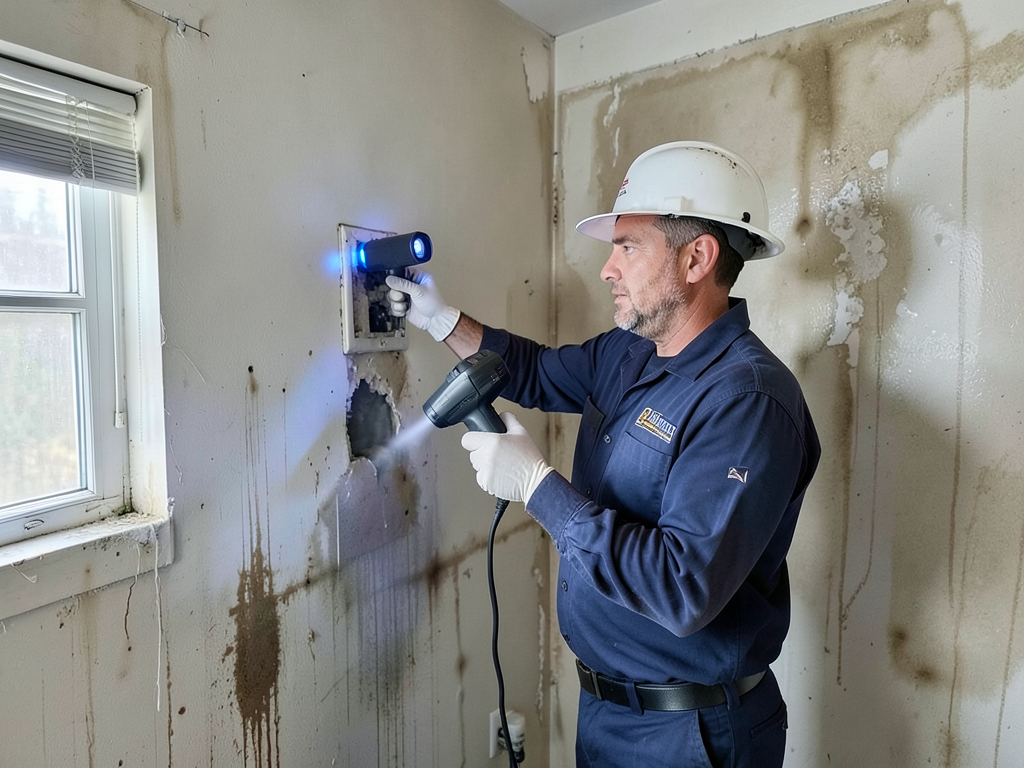
Technicians arrive within 60 minutes, wearing personal protective equipment. They use thermal imaging cameras to identify all affected areas, not just visible water.
- Water Extraction
Commercial-grade extractors remove standing water. For AC leaks, special attention goes to carpet padding and under-unit areas where water accumulates.
- Demolition of Unsalvageable Materials
Based on moisture readings, technicians remove damaged drywall, insulation, and flooring that cannot be dried in place.
- Structural Drying
Industrial air movers and dehumidifiers run continuously. In Richmond’s humidity, desiccant dehumidifiers often work alongside standard units.
- Antimicrobial Treatment
EPA-registered antimicrobials prevent mold growth. This is critical in Richmond where mold can establish in 24-48 hours.
- Moisture Monitoring
Daily readings ensure materials return to safe moisture content levels before reconstruction begins.
The entire process typically takes 3-5 days for moderate damage, but Richmond’s humidity can extend drying times. Professional restorers track progress with moisture mapping, ensuring no hidden pockets remain that could cause future problems.
Richmond-Specific Considerations for AC Water Damage
Several local factors make water damage restoration in Richmond unique:
Soil Composition: Richmond’s heavy clay soil retains moisture and expands when wet. This puts additional pressure on foundation walls where AC units are often located, potentially causing cracks that allow water to seep back into your home.
Historic District Regulations: If you live in a designated historic district like Church Hill or Jackson Ward, exterior repairs may require approval from the Richmond Department of Planning and Development Review. This includes modifications to drainage systems that might be necessary to prevent future AC leaks.
Combined Sewer Overflow System: Parts of Richmond still operate on combined sewer systems where stormwater and sewage share pipes. During heavy rains—common in our summer thunderstorms—this system can back up, potentially introducing contaminated water into basements where AC units are located.
James River Floodplain: Homes in low-lying areas near the river face additional flood risks that compound AC-related water damage. The floodplain map maintained by the City of Richmond shows many neighborhoods where elevation is less than 10 feet above sea level.
Insurance Coverage for AC-Related Water Damage
Most standard homeowners insurance policies in Virginia cover sudden AC water damage, but the specifics matter:
What’s Typically Covered: Damage from a sudden, accidental condensate line failure. This includes water removal, drying, and repair of damaged structures.
What’s Usually Excluded: Damage from lack of maintenance, gradual leaks over time, or mold resulting from long-term moisture exposure. Insurance companies consider these preventable with proper maintenance.
Documentation Requirements: To support your claim, document everything with photos and videos before cleanup begins. Keep all receipts for emergency services. Richmond insurance adjusters often request proof that you attempted to mitigate damage immediately after discovery.
Many Richmond restoration companies work directly with insurance providers and can help document the damage according to carrier requirements. They provide detailed moisture reports and damage assessments that streamline the claims process.
Preventing Future AC Water Damage
After experiencing one AC leak, homeowners often ask how to prevent recurrence. Here are proven strategies for Richmond properties:
- Annual Maintenance Schedule
Schedule professional AC maintenance in early spring before cooling season. Technicians should clean the condensate line with algaecide tablets and check for proper drainage.
- Install a Safety Switch
Float switches automatically shut off your AC when the drain pan fills, preventing overflow. This is especially valuable for second-floor installations common in Richmond’s older homes.
- Upgrade to Larger Drain Lines
Modern high-efficiency units produce more condensation. Upgrading from 3/4-inch to 1-inch drain lines reduces clog risk and handles Richmond’s high humidity output.
- Improve Attic Ventilation
Proper ventilation reduces the temperature differential that causes excessive condensation. This is particularly important in Richmond’s hot, humid summers.
Consider installing a condensate pump if your unit is below grade or in a basement. These pumps actively remove water even when gravity drainage is insufficient—a common issue in Richmond’s low-lying areas.
When to Call for Emergency Help
Not every AC leak requires immediate professional intervention, but these situations demand urgent response:
- Water spreading across multiple rooms or floors
- Visible mold growth already present
- Water near electrical components or outlets
- Standing water deeper than 1/4 inch
- Musty odors indicating active mold colonization
- Water damage occurring after business hours or on weekends
In Richmond’s climate, waiting even 24 hours can mean the difference between simple drying and extensive mold remediation. The combination of heat and humidity creates exponential damage growth that basic fans cannot address.
Professional restoration teams arrive equipped with industrial-grade equipment that can extract gallons of water per minute and reduce humidity levels to below 40%—conditions where mold cannot survive. This rapid response is why certified restoration companies can often save hardwood floors and drywall that homeowners would otherwise need to replace.
Don’t let a simple AC clog turn into a major renovation project. If you’re dealing with water damage from a clogged condensate line, call (804) 602-2644 now for immediate response. Our certified technicians serve all of Richmond and surrounding areas, arriving within 60 minutes to stop the damage and begin restoration. We work directly with your insurance company and provide clear documentation of all work performed.
Pick up the phone and call (804) 602-2644 before the next storm hits. Water damage only gets worse with time, and Richmond’s humidity means every hour counts toward preventing mold growth and structural damage.
Frequently Asked Questions
How long does it take for mold to grow after an AC leak?
In Richmond’s humid climate, mold can begin growing within 24-48 hours after water exposure. The combination of warmth and moisture creates ideal conditions for spores to colonize building materials, especially porous surfaces like drywall and carpet padding.
Can I clean up AC water damage myself?
For small spills under 10 square feet that you catch immediately, DIY cleanup might be sufficient. However, if water has spread to walls, flooring, or you notice any mold growth, professional restoration is necessary to prevent health hazards and ensure complete drying. Sump Pump Failure Cleanup and Repair in Bon Air.
Will my insurance cover AC condensate line damage?
Most policies cover sudden, accidental water damage from AC systems. However, they typically exclude damage from lack of maintenance or gradual leaks. Document everything and contact your insurance company promptly after discovering the damage.
How much does professional water damage restoration cost?
Costs vary based on damage extent, but typical AC leak restoration in Richmond ranges from $1,500 to $5,000. Factors include square footage affected, materials requiring replacement, and whether mold remediation is necessary.
What’s the difference between HVAC repair and water damage restoration?
HVAC repair fixes the mechanical problem causing the leak, while water damage restoration addresses the moisture that has already penetrated your home’s structure. You often need both services, but they require different expertise and equipment.
{
“@context”: “https://schema.org”,
“@type”: “BlogPosting”,
“headline”: “Fixing Water Damage Caused by a Clogged AC Condensate Line”,
“description”: “Is your AC leaking water inside your Richmond home? Learn why clogged condensate lines cause water damage and how our emergency restoration team stops mold growth fast.”,
“wordCount”: 1931,
“datePublished”: “2026-03-21T07:01:00.000Z”,
“dateModified”: “2026-03-21T07:01:00.000Z”,
“inLanguage”: “en-US”,
“mainEntityOfPage”: {
“@type”: “WebPage”,
“@id”: “https://horizonwaterdamagerestorationrichmond.com”
},
“publisher”: {
“@type”: “LocalBusiness”,
“name”: “Horizon Water Damage Restoration Richmond”,
“url”: “https://horizonwaterdamagerestorationrichmond.com”
},
“author”: {
“@type”: “Organization”,
“name”: “Horizon Water Damage Restoration Richmond”,
“url”: “https://horizonwaterdamagerestorationrichmond.com”
},
“image”: {
“@type”: “ImageObject”,
“url”: “https://horizonwaterdamagerestorationrichmond.com/wp-content/uploads/2026/03/fixing-water-damage-caused-by-a-clogged-ac-condens-1.png”
}
}
{
“@context”: “https://schema.org”,
“@type”: “LocalBusiness”,
“name”: “Horizon Water Damage Restoration Richmond”,
“url”: “https://horizonwaterdamagerestorationrichmond.com”,
“address”: {
“@type”: “PostalAddress”,
“addressLocality”: “Richmond”
},
“areaServed”: {
“@type”: “City”,
“name”: “Richmond”
}
}
{
“@context”: “https://schema.org”,
“@type”: “FAQPage”,
“mainEntity”: [
{
“@type”: “Question”,
“name”: “How long does it take for mold to grow after an AC leak?”,
“acceptedAnswer”: {
“@type”: “Answer”,
“text”: “In Richmond’s humid climate, mold can begin growing within 24-48 hours after water exposure. The combination of warmth and moisture creates ideal conditions for spores to colonize building materials, especially porous surfaces like drywall and carpet padding.”
}
},
{
“@type”: “Question”,
“name”: “Can I clean up AC water damage myself?”,
“acceptedAnswer”: {
“@type”: “Answer”,
“text”: “For small spills under 10 square feet that you catch immediately, DIY cleanup might be sufficient. However, if water has spread to walls, flooring, or you notice any mold growth, professional restoration is necessary to prevent health hazards and ensure complete drying. Sump Pump Failure Cleanup and Repair in Bon Air.”
}
},
{
“@type”: “Question”,
“name”: “Will my insurance cover AC condensate line damage?”,
“acceptedAnswer”: {
“@type”: “Answer”,
“text”: “Most policies cover sudden, accidental water damage from AC systems. However, they typically exclude damage from lack of maintenance or gradual leaks. Document everything and contact your insurance company promptly after discovering the damage.”
}
},
{
“@type”: “Question”,
“name”: “How much does professional water damage restoration cost?”,
“acceptedAnswer”: {
“@type”: “Answer”,
“text”: “Costs vary based on damage extent, but typical AC leak restoration in Richmond ranges from $1,500 to $5,000. Factors include square footage affected, materials requiring replacement, and whether mold remediation is necessary.”
}
},
{
“@type”: “Question”,
“name”: “What’s the difference between HVAC repair and water damage restoration?”,
“acceptedAnswer”: {
“@type”: “Answer”,
“text”: “HVAC repair fixes the mechanical problem causing the leak, while water damage restoration addresses the moisture that has already penetrated your home’s structure. You often need both services, but they require different expertise and equipment.”
}
}
]
}
{
“@context”: “https://schema.org”,
“@type”: “HowTo”,
“name”: “Emergency AC Water Damage Response”,
“step”: [
{
“@type”: “HowToStep”,
“position”: 1,
“name”: “Turn Off the System”,
“text”: “Locate your thermostat and switch the AC to \”off\” immediately. This prevents the unit from continuing to produce condensation while the drain line is blocked.”
},
{
“@type”: “HowToStep”,
“position”: 2,
“name”: “Clear Standing Water”,
“text”: “Use towels, mops, or a wet vacuum to remove visible water. Focus on areas around the unit, but check nearby flooring for hidden moisture that may have spread. Commercial Water Damage Restoration for Downtown Richmond Businesses.”
},
{
“@type”: “HowToStep”,
“position”: 3,
“name”: “Check the Air Filter”,
“text”: “A dirty filter can cause the evaporator coil to freeze, leading to overflow when it thaws. Replace it if it’s clogged or hasn’t been changed in over 60 days.”
},
{
“@type”: “HowToStep”,
“position”: 4,
“name”: “Inspect for Visible Blockages”,
“text”: “Look for obvious debris in the drain pan or around the condensate line exit point. Richmond’s pollen season often introduces organic material that can clog these systems.”
}
],
“image”: “https://horizonwaterdamagerestorationrichmond.com/wp-content/uploads/2026/03/fixing-water-damage-caused-by-a-clogged-ac-condens-1.png”
}
{
“@context”: “https://schema.org”,
“@type”: “BreadcrumbList”,
“itemListElement”: [
{
“@type”: “ListItem”,
“position”: 1,
“name”: “Home”,
“item”: “https://horizonwaterdamagerestorationrichmond.com”
},
{
“@type”: “ListItem”,
“position”: 2,
“name”: “Blog”,
“item”: “https://horizonwaterdamagerestorationrichmond.com/blog”
},
{
“@type”: “ListItem”,
“position”: 3,
“name”: “Fixing Water Damage Caused by a Clogged AC Condensate Line”
}
]
}
{
“@context”: “https://schema.org”,
“@type”: “Service”,
“serviceType”: “Water Damage Restoration”,
“provider”: {
“@type”: “LocalBusiness”,
“name”: “Horizon Water Damage Restoration Richmond”,
“url”: “https://horizonwaterdamagerestorationrichmond.com”
},
“areaServed”: {
“@type”: “City”,
“name”: “Richmond”
},
“description”: “Is your AC leaking water inside your Richmond home? Learn why clogged condensate lines cause water damage and how our emergency restoration team stops mold growth fast.”
}