



Menu

Commercial Mold Remediation in Richmond – Protecting Your Business Operations and Property Value

Fast-track commercial mold mitigation that minimizes downtime, ensures regulatory compliance, and protects your employees, tenants, and bottom line across Richmond's office buildings, warehouses, and retail properties.

Slider Image 1
Slider Image 2
Slider Image 3
Slider Image 4
Slider Image 5
Slider Image 7
Slider Image 8
Slider Image 9
Slider Image 10
Slider Image 11

Why Richmond's Climate Creates High-Risk Mold Conditions for Commercial Properties

Richmond's position along the James River creates persistent humidity levels that threaten commercial properties year-round. The subtropical climate produces average humidity readings above 70 percent during summer months, creating ideal conditions for fungal growth in HVAC systems, below-grade spaces, and wall cavities.

Commercial buildings face unique vulnerabilities. Flat roofs common in Richmond's Shockoe Bottom and Scott's Addition industrial corridors trap moisture from poor drainage. Aging brick facades in the Fan District and Church Hill allow water intrusion through deteriorated mortar joints. Warehouse facilities near the Port of Richmond experience condensation issues from temperature differentials between conditioned spaces and unconditioned loading docks.

The business impact is immediate. Visible mold triggers liability concerns with employees and customers. Hidden fungal growth degrades indoor air quality, violates OSHA standards, and creates potential legal exposure. Property values decline when buyers discover remediation history during due diligence.

Commercial mold removal requires different protocols than residential work. You need crews who can work during off-hours to avoid disrupting operations. You need commercial mold abatement that addresses entire HVAC systems, not just visible surface growth. You need documentation that satisfies insurance carriers and regulatory bodies.

Business mold remediation in Richmond demands providers who understand the urgency of maintaining operations while executing thorough commercial mold mitigation. The longer mold persists, the more it compromises your building envelope, threatens tenant retention, and increases your total remediation spend.

Why Richmond's Climate Creates High-Risk Mold Conditions for Commercial Properties
Industrial-Scale Remediation Protocols That Protect Business Continuity

Industrial-Scale Remediation Protocols That Protect Business Continuity

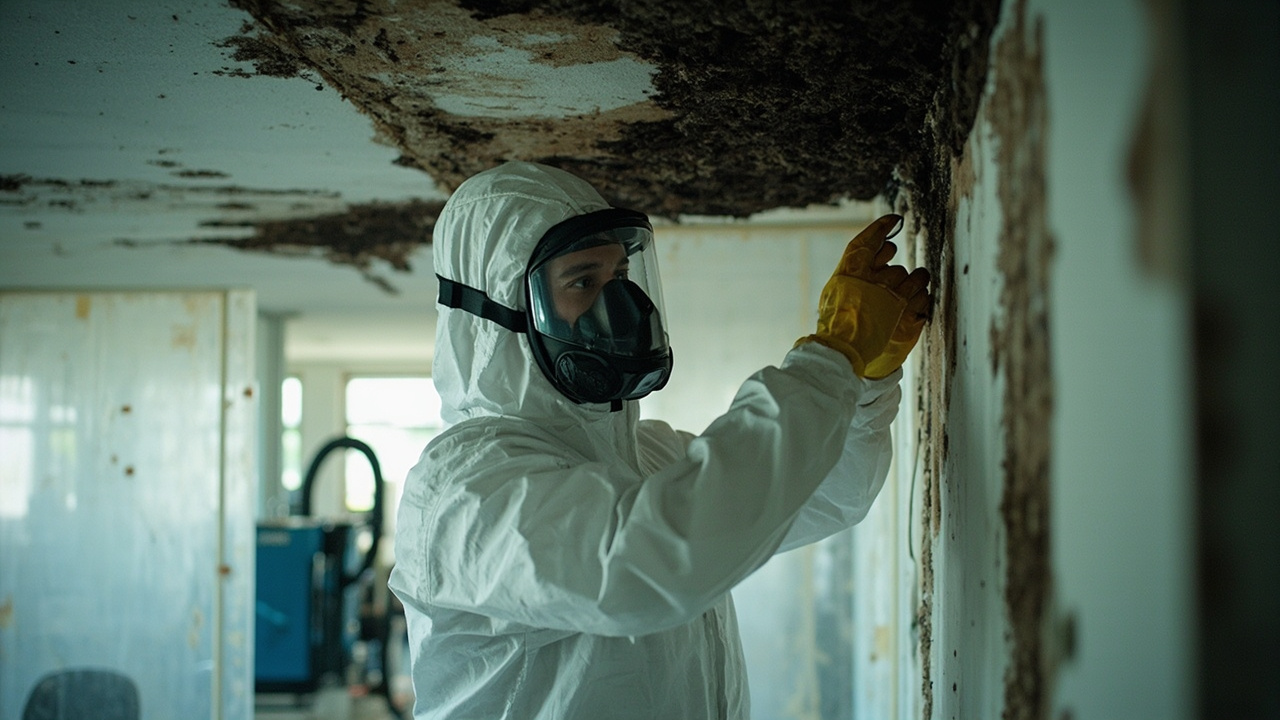
Commercial mold cleanup follows containment protocols that residential jobs do not require. We establish negative air pressure chambers using HEPA filtration units rated for spaces up to 10,000 square feet. Critical path barriers prevent cross-contamination into active business areas while remediation proceeds in isolated zones.

Our approach begins with moisture mapping using thermal imaging and hygrometers to identify all water sources feeding fungal growth. Richmond's clay soil creates hydrostatic pressure against foundation walls. We trace whether moisture enters through compromised waterproofing membranes, condensation from inadequate vapor barriers, or plumbing failures in concealed pipe chases.

We remove contaminated materials down to structural elements. Drywall, insulation, and ceiling tiles get bagged in six-mil polyethylene and removed through dedicated egress points that bypass occupied spaces. We HEPA-vacuum all framing members and treat with EPA-registered antimicrobial agents that prevent recurrence.

HVAC systems receive separate remediation. Mold colonizes cooling coils, drain pans, and ductwork, spreading spores throughout your building every time systems operate. We clean coil assemblies with biocides, sanitize ductwork using contact cleaners or replace sections with heavy colonization, and install UV germicidal lights at coil faces to prevent future growth.

Commercial mold mitigation requires post-remediation verification. We conduct clearance testing using third-party industrial hygienists who collect air samples and surface swabs. Results confirm spore counts return to baseline levels before we remove containment barriers. You receive lab reports and photographic documentation that satisfy insurance requirements and demonstrate due diligence to regulators.

Our Commercial Remediation Workflow

Commercial Mold Remediation in Richmond – Protecting Your Business Operations and Property Value
01

Facility Assessment and Scope Development

We conduct after-hours site investigations to avoid disrupting daily operations. Our technicians map contaminated areas, identify moisture sources, and develop remediation scopes that isolate work zones from active business spaces. You receive detailed protocols specifying containment boundaries, equipment staging areas, material disposal routes, and projected timelines that align with your operational constraints and minimize business interruption.
02

Containment and Material Removal

We build physical barriers using flame-retardant polyethylene sheeting and pressure-seal zippers, creating isolated work zones under negative air pressure. HEPA air scrubbers exchange contaminated air 15 times per hour while remediation crews remove compromised materials. All debris exits through external chutes or designated pathways that prevent spore migration into occupied areas. Real-time air monitoring verifies containment integrity throughout the commercial mold abatement process.
03

Verification and Operational Handoff

Third-party industrial hygienists collect post-remediation air samples and surface samples from previously contaminated areas. Lab analysis confirms spore counts meet AIHA guidelines before we remove containment systems. You receive comprehensive documentation including clearance reports, disposal manifests, and photographic records of all remediation phases. We coordinate with your facilities team to restore HVAC operations and return spaces to full service with minimal transition time.

Why Richmond Businesses Choose Horizon Water Damage Restoration Richmond for Commercial Remediation

Commercial mold removal demands different capabilities than residential work. You need crews with capacity to mobilize quickly, work extended shifts to meet compressed timelines, and execute jobs without disrupting your operations or alarming tenants.

We maintain equipment inventories sized for commercial spaces. Our trailer-mounted desiccant dehumidifiers extract moisture from areas up to 50,000 cubic feet. We deploy industrial air scrubbers that process 2,000 CFM through HEPA filtration. When jobs require it, we bring in mobile generators to power equipment without overloading your electrical service.

Our project managers understand Richmond's commercial building stock. We know the flat roof assemblies common in Southside industrial parks prone to ponding and membrane failures. We recognize the crawlspace moisture issues in older Carytown retail buildings with inadequate vapor barriers over clay soil. We have remediated mold in downtown high-rises where HVAC condensate line failures flooded finished spaces.

Business mold remediation requires coordination with multiple stakeholders. We communicate directly with property managers, insurance adjusters, and facility directors throughout the project lifecycle. You receive daily progress updates, change order approvals before scope modifications, and advance notice of any discoveries that impact timelines.

We execute commercial mold mitigation during hours that protect your business operations. Evening and weekend shifts let us complete disruptive demolition and material removal when your building is unoccupied. Containment protocols let adjacent spaces remain operational even while remediation proceeds.

Richmond businesses need providers who understand regulatory compliance. We document every phase to support insurance claims and satisfy Virginia Department of Health requirements. Our remediation follows IICRC S520 standards, and we coordinate third-party verification testing that provides independent confirmation of successful commercial mold cleanup.

What Richmond Businesses Should Expect from Professional Commercial Mold Remediation

Rapid Mobilization and Project Timelines

We dispatch assessment teams within four hours of your call. Most commercial evaluations conclude within 24 hours with written scopes and project timelines. Remediation mobilization depends on project scale. Small office suites under 2,000 square feet typically see crews on-site within 48 hours. Larger facilities requiring extensive containment and equipment staging may need three to five days for setup. We structure work schedules around your operational needs, executing disruptive phases during off-hours and coordinating closely with your facilities team to maintain business continuity throughout the commercial mold mitigation process.

Comprehensive Assessment and Moisture Diagnostics

Initial evaluations combine visual inspection with diagnostic tools. Thermal imaging identifies temperature anomalies indicating water intrusion or insulation voids. Moisture meters quantify water content in building materials. We inspect HVAC systems for contaminated coils and ductwork. You receive detailed reports mapping all affected areas, identifying moisture sources, and outlining remediation protocols required to address both visible growth and hidden contamination. Assessment findings guide scope development and provide documentation for insurance claims. We identify whether issues stem from roof leaks, plumbing failures, condensation, or groundwater intrusion through foundation assemblies.

Verified Clean Environments and Regulatory Documentation

Commercial mold cleanup delivers more than clean surfaces. You receive spaces that meet indoor air quality standards verified through independent testing. Post-remediation clearance sampling by third-party industrial hygienists confirms spore counts return to baseline levels. Lab reports demonstrate compliance with AIHA guidelines and satisfy insurance carrier requirements. We provide complete project documentation including disposal manifests, photographic records of all work phases, moisture readings throughout the drying process, and clearance certificates. This documentation protects you from future liability and demonstrates due diligence to regulators, insurance carriers, and prospective property buyers.

Post-Remediation Moisture Management Strategies

Successful commercial mold abatement requires addressing root causes, not just removing contaminated materials. We identify building envelope deficiencies and mechanical system shortcomings that created conditions for fungal growth. You receive recommendations for permanent moisture control including roof repairs, foundation waterproofing, HVAC modifications, and improved ventilation. We install monitoring equipment in high-risk areas and provide maintenance protocols that prevent recurrence. For properties with chronic moisture issues, we offer quarterly inspections and humidity monitoring services that identify problems before they escalate into full remediation events requiring business disruption.

Frequently Asked Questions

You Have Questions,
We Have Answers

What do professionals use for mold remediation? +

Professionals use industrial HEPA air scrubbers to filter airborne spore loads, antimicrobial agents like quaternary ammonium compounds to kill surface colonies, and negative air machines to prevent cross-contamination during removal. Containment barriers seal affected zones, while moisture meters identify hidden water intrusion fueling growth. Commercial-grade dehumidifiers stabilize humidity below 60 percent to prevent recurrence. In Richmond facilities with high humidity from the James River corridor, professionals also apply encapsulants to porous surfaces like drywall and wood framing. Tools include wire brushing for HVAC ducts, media blasting for concrete, and infrared cameras to map thermal anomalies indicating moisture pockets behind walls.

How much does it cost to professionally remove mold? +

Commercial mold remediation costs depend on contamination severity, square footage, and structural access. Small containment areas cost less than multi-floor HVAC system cleanouts. Facilities requiring business continuity measures or after-hours work increase labor costs. Richmond properties with crawl space moisture issues or flat roof leaks add investigation and repair expenses. Sampling, air quality testing, and post-remediation clearance reports add to total outlays. Insurance coverage varies by policy language and documented maintenance records. Request itemized proposals covering containment, removal, HVAC cleaning, and moisture control to compare vendor scope accurately. Cheap bids often skip necessary steps, creating liability exposure.

Is professional mold removal worth it? +

Professional removal protects liability exposure and maintains code compliance. DIY approaches miss hidden colonies in HVAC systems, wall cavities, and ceiling plenums. Professionals document chain of custody for insurance claims and potential litigation, providing defensible clearance testing. In Richmond, where humidity drives year-round spore activity, improper containment spreads contamination across tenant spaces, triggering ADA and OSHA violations. Commercial leases often mandate certified remediation to protect landlord interests. Professional removal also prevents business interruption from recurring outbreaks. The upfront cost avoids expensive tenant lawsuits, regulatory fines, and facility closures. For businesses, this is risk mitigation, not discretionary spending.

What is commercial mold remediation? +

Commercial mold remediation removes fungal growth from business facilities while minimizing operational disruption. It includes air quality testing, containment setup, physical removal of contaminated materials, HVAC decontamination, antimicrobial treatment, and moisture source elimination. Unlike residential work, commercial projects demand compliance with OSHA worker safety standards, ADA tenant protections, and local building codes. Richmond businesses face added complexity from historic building restrictions and humid conditions near the James River. The process requires documentation for insurance claims, tenant notifications, and regulatory reporting. Proper remediation addresses liability risk, protects employee health, and maintains property value. Speed matters to avoid revenue loss from closed facilities.

How much does professional mold removal cost? +

Professional removal costs vary based on contamination extent, facility size, and access difficulty. Limited outbreaks confined to single rooms cost less than systemic infestations spanning multiple floors or penetrating HVAC infrastructure. Richmond facilities with chronic moisture problems from aging roofs or foundation issues require additional waterproofing, increasing total expenses. Emergency response and after-hours work to avoid business interruption add premium labor charges. Testing, clearance reports, and third-party verification contribute to final costs. Insurance policies may cover sudden water damage but exclude deferred maintenance claims. Obtain detailed scopes comparing containment methods, removal techniques, and post-remediation monitoring to evaluate true vendor costs.

What kills mold permanently? +

Nothing kills mold permanently without eliminating the moisture source. Antimicrobial agents and biocides destroy active colonies, but spores remain dormant until water reintroduces itself. Effective control requires maintaining indoor humidity below 60 percent, fixing leaks immediately, and ensuring proper ventilation. In Richmond facilities, dehumidification systems counter humid summer conditions and prevent condensation on cold surfaces. Physical removal of porous materials like drywall and insulation eliminates embedded colonies that chemicals cannot reach. HEPA vacuuming captures surface spores, while encapsulants seal residual growth on non-porous substrates. Long-term prevention depends on building envelope integrity, HVAC maintenance, and rapid water intrusion response.

Can black mold be fully remediated? +

Black mold remediation follows the same protocols as other species. Stachybotrys chartarum requires complete physical removal from porous materials and antimicrobial treatment of non-porous surfaces. Containment prevents airborne spore migration during disturbance. HEPA filtration captures particles down to 0.3 microns, removing spores from air. Richmond facilities with water-damaged wood framing or ceiling tiles often harbor black mold in hidden cavities, requiring invasive inspection and removal. Post-remediation clearance testing verifies spore counts return to baseline levels. Full remediation is achievable when moisture sources are eliminated and contaminated materials are properly discarded. Encapsulation alone fails because it leaves viable colonies intact.

Is mold remediation tax deductible? +

Mold remediation is tax deductible as a business operating expense under IRS guidelines. Costs for removing contamination that threatens employee health or tenant safety qualify as ordinary and necessary expenses. Capital improvements addressing underlying structural defects may require depreciation over time rather than immediate deduction. Richmond businesses should document remediation as maintenance rather than improvement to maximize current-year deductions. Consult a tax professional to distinguish between deductible repairs and capitalized improvements. Remediation following sudden water damage typically qualifies for full deduction. Expenses from deferred maintenance or gradual deterioration may face scrutiny. Keep detailed invoices, scope documents, and clearance reports for audit defense.

What are signs of mold exposure? +

Mold exposure causes respiratory irritation, persistent coughing, wheezing, and sinus congestion. Employees may report headaches, fatigue, and difficulty concentrating. Skin rashes and eye irritation occur with direct contact or airborne spore inhalation. Individuals with asthma or compromised immune systems experience severe reactions. In Richmond facilities with poor ventilation and high humidity, chronic exposure worsens symptoms over time. Musty odors signal hidden growth in walls, ceilings, or HVAC systems. Visible discoloration on surfaces confirms active colonies. Document employee complaints for OSHA compliance and liability protection. Medical evaluation by occupational health professionals establishes causation for workers' compensation claims.

How hard is it to win a mold lawsuit? +

Mold lawsuits face high evidentiary burdens. Plaintiffs must prove direct causation between exposure and specific health damages, requiring expert testimony linking spore species to medical conditions. Property owners who document rapid response, proper remediation, and compliance with building codes create strong defenses. Richmond cases require navigating Virginia contributory negligence standards, where any plaintiff fault bars recovery. Successful claims typically involve gross negligence, concealed defects, or repeated tenant complaints ignored by landlords. Insurance coverage disputes add complexity. Preventive documentation, prompt remediation, and third-party clearance testing reduce litigation risk more effectively than fighting lawsuits after filing.

How Richmond's Historic Building Stock and Humidity Create Persistent Commercial Mold Challenges

Richmond's commercial real estate includes thousands of buildings constructed before modern moisture management standards existed. Warehouses in Shockoe Bottom and Manchester lack vapor barriers beneath concrete slabs poured directly on clay soil. The resulting ground moisture wicks into wall assemblies and creates persistent dampness that feeds mold growth. Office buildings along Broad Street feature original single-pane windows and uninsulated masonry walls that generate condensation when interior humidity contacts cold surfaces during winter months. Combined with average relative humidity above 70 percent from June through September, these building envelope deficiencies create year-round conditions where commercial mold removal becomes necessary to maintain safe, compliant work environments.

Business mold remediation in Richmond requires understanding local construction methods and environmental conditions. Properties near the James River face elevated humidity from water proximity. Buildings with basements excavated into Richmond's clay soil experience hydrostatic pressure that drives moisture through foundation walls. Horizon Water Damage Restoration Richmond has remediated commercial properties throughout the metro area, from retail spaces in Carytown to industrial facilities near the Port of Richmond. Our familiarity with local building stock, seasonal moisture patterns, and common failure points lets us develop targeted remediation strategies that address Richmond-specific challenges rather than applying generic protocols that may overlook regional factors affecting long-term moisture control.

Water Damage Restoration Services in The Richmond Area

Horizon Water Damage Restoration proudly serves the greater Richmond area and surrounding communities. Our strategic location allows us to respond quickly and efficiently to your water damage emergencies, no matter where you are. We are committed to being a local, reliable presence for our neighbors. View our service area on the map below to see how we can reach you and provide the swift, expert service you need.

Address:
Horizon Water Damage Restoration Richmond, 1840 W Broad St, Richmond, VA, 23220

Additional Services We Offer

Our news updates

Latest Articles & News from The Blogs

Investigating a Suddenly High Richmond Water Bill (Where to Look for Hidden Leaks) A sudden spike in your water bill…

Investigating a Suddenly High Richmond Water Bill (Where to Look for Hidden Leaks)

Investigating a Suddenly High Richmond Water Bill (Where to Look for Hidden Leaks) A sudden spike in your water bill…

Should You Close Your Crawl Space Vents During the Humid Virginia Summer Months?

Should You Close Your Crawl Space Vents During the Humid Virginia Summer Months? Richmond’s summer humidity often exceeds 80% and…

What Bubbling Paint on Your Ceiling Actually Says About Your Roof or Plumbing

What Bubbling Paint on Your Ceiling Actually Says About Your Roof or Plumbing Bubbling paint on your ceiling is more…

Contact Us

Mold compromises your property value, threatens employee health, and creates regulatory liability. Get immediate assessment and remediation planning from commercial mold mitigation specialists who minimize business disruption. Call (804) 602-2644 now for rapid response.