



Menu

Business Interruption Mitigation in Richmond – Industrial-Grade Water Damage Response That Keeps Your Operations Running

When water damage strikes your Richmond commercial facility, every hour offline costs revenue. Our rapid deployment protocols and sectional containment strategies minimize business downtime while we restore your property to full operational capacity.

Slider Image 1
Slider Image 2
Slider Image 3
Slider Image 4
Slider Image 5
Slider Image 7
Slider Image 8
Slider Image 9
Slider Image 10
Slider Image 11

Why Richmond Commercial Properties Face Critical Downtime Risk from Water Events

Richmond's position along the James River floodplain creates persistent risk for commercial facilities during seasonal flooding events. Your business faces threats from multiple vectors: aging municipal water infrastructure, sudden pipe failures during freeze-thaw cycles, and humidity-driven condensation in HVAC systems serving large commercial spaces.

The cost calculation is immediate. A flooded warehouse halts distribution. A soaked office building forces employee evacuation. A restaurant kitchen with standing water cannot serve customers. Each hour your doors stay closed represents lost revenue, contract penalties, and customer attrition to competitors who remain operational.

Richmond's commercial districts, from Shockoe Bottom to Scott's Addition, contain older buildings with elevated water intrusion risk. Ground-level retail spaces face stormwater infiltration through foundation walls. Multi-tenant office buildings experience cascading damage when upper-floor plumbing failures saturate multiple floors. Industrial facilities risk equipment damage and production line shutdowns.

Business continuity restoration starts with speed. Water spreads through building materials in minutes, not hours. Drywall wicks moisture vertically. Concrete slabs trap water beneath flooring systems. HVAC plenums distribute contaminated air throughout your facility.

Mitigating commercial downtime requires industrial extraction capacity, strategic containment, and parallel workflow execution. You need teams working simultaneously on water removal, structural drying, content protection, and temporary operational workarounds. Standard residential restoration timelines do not apply to commercial operations where every day closed multiplies your losses.

The path forward requires specialized commercial water damage response focused on limiting business disruption while executing complete remediation. Your Richmond facility needs teams who understand that reducing operational downtime directly impacts your bottom line.

Why Richmond Commercial Properties Face Critical Downtime Risk from Water Events
Strategic Response Protocols for Commercial Water Damage Events

Strategic Response Protocols for Commercial Water Damage Events

Effective business interruption mitigation follows structured deployment protocols developed specifically for commercial operations. Our approach separates affected zones from functional areas, allowing partial facility operation during restoration.

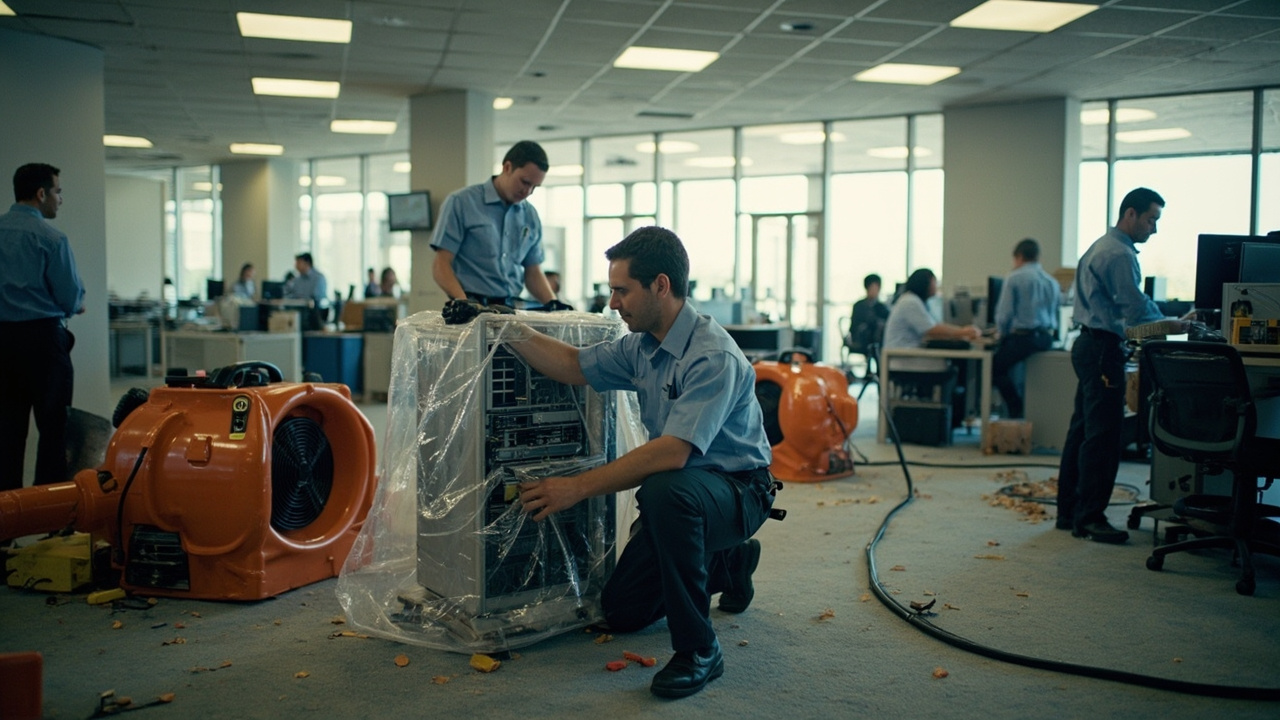
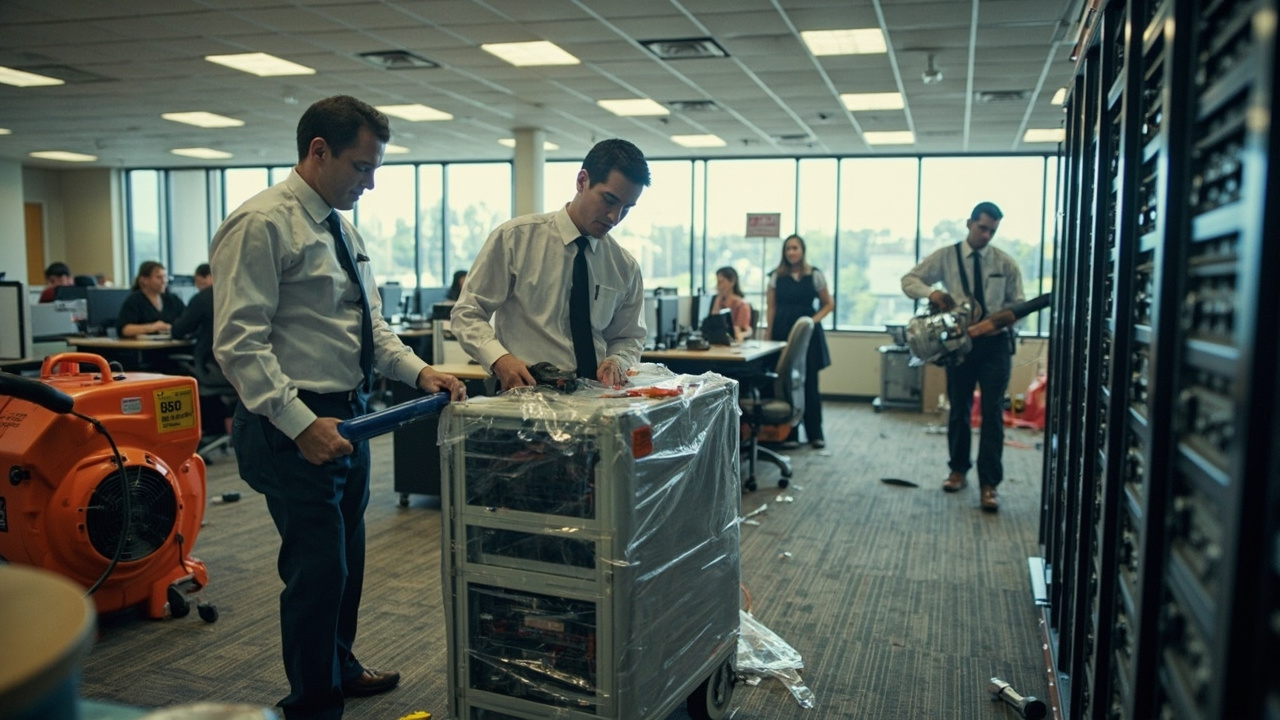
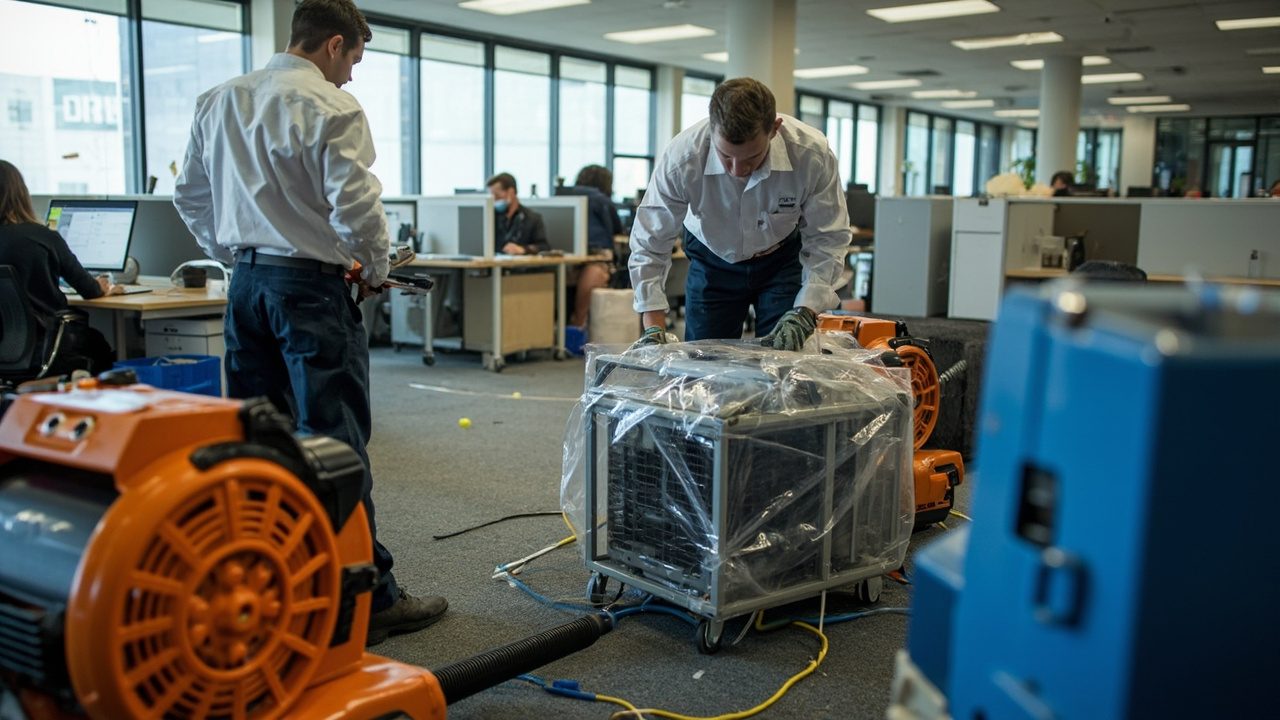
Sectional containment establishes negative air pressure barriers using industrial air scrubbers and polyethylene isolation walls. This prevents cross-contamination between remediation zones and active business areas. Your accounting department continues working while we extract water from the warehouse. Your retail floor stays open while we dry out back-of-house areas.

Moisture mapping uses thermal imaging and penetrating moisture meters to identify hidden water migration paths. Water travels through wall cavities, above drop ceilings, and beneath raised flooring systems. We document moisture levels in structural materials, creating drying benchmarks that prove complete remediation to your insurance adjuster.

Equipment staging matches the scale of commercial damage. Truck-mounted extractors remove standing water at rates exceeding 200 gallons per minute. Low-grain refrigerant dehumidifiers pull moisture from the air faster than conventional units. Axial air movers create airflow across structural surfaces, accelerating evaporation without disrupting active workspaces.

Documentation protocols support your insurance claim and business interruption filing. We photograph damage progression, log equipment placement, track daily moisture readings, and maintain chain-of-custody records for contaminated materials requiring disposal. This documentation substantiates your claim for lost revenue during the closure period.

Coordination with your existing operations distinguishes commercial restoration from residential work. We schedule loud equipment operation during off-hours. We route employee foot traffic around active work zones. We coordinate with your IT team before touching server rooms or telecommunications closets.

The methodology focuses on parallel execution rather than sequential steps. Multiple specialized teams work simultaneously across your facility, compressing restoration timelines from weeks to days. Speed directly translates to reduced business interruption losses.

How We Execute Rapid Commercial Restoration in Richmond

Business Interruption Mitigation in Richmond – Industrial-Grade Water Damage Response That Keeps Your Operations Running
01

Emergency Response and Damage Assessment

Our team arrives within 90 minutes of your call to assess damage scope and develop the action plan. We identify the water source, categorize contamination levels following IICRC S500 standards, and map affected zones using moisture detection equipment. You receive an immediate verbal briefing outlining restoration timelines and operational impact. This initial assessment determines equipment needs, personnel deployment, and coordination requirements with your insurance carrier. Documentation begins immediately with photographic evidence and preliminary moisture readings.
02

Containment and Extraction Operations

We establish containment barriers separating damaged areas from functional spaces, then deploy industrial extraction equipment to remove standing water. Truck-mounted vacuum systems handle large-volume extraction while portable units access confined areas. Salvageable inventory moves to protected zones. Critical equipment receives priority protection. Air scrubbers with HEPA filtration control airborne contaminants. Dehumidification equipment begins operating immediately to prevent secondary moisture migration. This phase executes rapidly, often completing within the first 24 hours to minimize your operational downtime.
03

Structural Drying and Verification

Controlled drying continues until all structural materials reach acceptable moisture content levels verified by daily meter readings. We monitor drying progress using thermal imaging to detect hidden moisture pockets requiring targeted treatment. Once materials reach equilibrium moisture content, we conduct final verification testing and document completion. Your facility receives a comprehensive restoration report detailing all work performed, equipment used, and final moisture readings. This documentation supports your insurance claim and provides the clearance needed to resume full business operations safely.

Why Richmond Businesses Choose Horizon Water Damage Restoration Richmond

Commercial water damage response differs fundamentally from residential restoration. Your business requires teams who understand operational continuity matters more than cosmetic perfection. Horizon Water Damage Restoration Richmond specializes in commercial facilities throughout the greater Richmond metro area, from manufacturing plants in Southside to office complexes in Innsbrook.

We maintain relationships with Richmond's commercial insurance adjusters, expediting claim approval and reducing payment delays. Our estimators speak the language of Xactimate line items and depreciation schedules. We understand how business interruption claims work and provide the documentation your carrier requires.

Local expertise matters when navigating Richmond's commercial building landscape. We know which downtown buildings contain cast iron drain stacks prone to catastrophic failure. We understand how Scott's Addition's converted industrial spaces route plumbing through exposed ceilings. We recognize the elevated flood risk in Shockoe Bottom properties near the James River floodwall.

Our equipment inventory matches commercial-scale demands. We deploy enough extraction and drying capacity to handle 50,000 square foot facilities without mobilizing equipment from other jobs. Response vehicles stay staged in Richmond, ensuring rapid deployment regardless of traffic conditions on I-64 or I-95.

Virginia regulatory compliance guides our methodology. We follow state guidelines for contaminated water handling and disposal. Our teams understand local building codes governing commercial occupancy during restoration. We coordinate with Richmond fire marshals when restoration work affects sprinkler systems or fire alarm networks.

The business interruption mitigation focus separates commercial specialists from general restoration contractors. We measure success by how quickly your employees return to work, not by how perfectly we match paint colors. Every decision prioritizes limiting business disruption while executing thorough remediation.

Horizon Water Damage Restoration Richmond serves commercial clients who cannot afford extended closures. Your operational timeline drives our restoration schedule.

What Richmond Commercial Clients Experience During Water Damage Restoration

Rapid Deployment and Immediate Action

You reach our dispatch center at (804) 602-2644 any time, day or night. Our commercial response team arrives within 90 minutes carrying the assessment equipment needed to scope your damage immediately. We do not schedule appointments or wait until morning. Water damage progresses by the hour, and delayed response multiplies your losses. Our teams carry authorization forms allowing us to begin emergency mitigation before your adjuster arrives. This immediate action stops damage progression and starts the clock on business continuity restoration. You receive hourly updates during the first 24 hours as extraction and containment operations progress.

Detailed Commercial Assessment and Planning

Our initial assessment examines your entire facility, not just visibly damaged areas. Thermal imaging identifies hidden moisture migration through wall assemblies and ceiling plenums. Moisture meters quantify water content in structural materials, establishing drying benchmarks. We map your facility's critical systems, identifying priority areas requiring immediate attention. The assessment includes operational impact analysis, projecting realistic timelines for partial and full restoration. You receive a written action plan outlining phase completion targets, equipment deployment schedules, and coordination requirements with your staff. This planning phase typically completes within four hours of arrival, allowing rapid transition to active restoration work.

Complete Restoration and Operational Clearance

Restoration concludes when all structural materials reach verified dry standards and your facility passes final inspection. We do not rely on visual assessment. Moisture meters confirm every affected material meets industry standards for dry conditions. You receive comprehensive documentation including daily moisture logs, equipment placement records, and photographic progression evidence. This package supports your insurance claim and provides the proof your carrier needs to process business interruption payments. Final walkthrough identifies any remaining concerns requiring attention. We coordinate timing of equipment removal to avoid disrupting your return to normal operations. Your Richmond facility receives clearance to resume full business activity backed by documented verification.

Ongoing Monitoring and Follow-Up Support

Post-restoration monitoring ensures no hidden moisture remains to cause future problems. We schedule follow-up inspections at 30 and 90 days to verify structural materials maintain appropriate moisture levels. These visits use the same thermal imaging and moisture detection equipment deployed during initial assessment, providing objective comparison data. If any areas show elevated readings, we address them immediately at no additional cost. You receive written verification after each follow-up visit documenting continued dry conditions. This ongoing support protects your investment in restoration work and prevents secondary damage from missed moisture. Richmond's humid climate makes this follow-up particularly important for commercial facilities with climate-controlled environments.

Frequently Asked Questions

You Have Questions,
We Have Answers

What does business interruption coverage cover? +

Business interruption coverage pays for lost income and ongoing expenses when your Richmond facility cannot operate due to a covered peril. This includes fire, water damage, or storm events. The policy compensates you for net profit losses, continuing overhead like rent and payroll, and temporary relocation costs. Coverage applies only when property damage forces you to close or reduce operations. Richmond businesses face risks from James River flooding and aging commercial infrastructure. This coverage bridges the gap between physical damage restoration and full operational recovery, keeping your business financially viable during downtime.

What is mitigation in business? +

Mitigation in business refers to actions taken to reduce risk, limit damage, or minimize financial loss. For Richmond commercial properties, mitigation includes emergency response protocols, backup systems, and rapid damage containment. When water damage or fire strikes, mitigation starts immediately. You extract water, stabilize the structure, and document losses. This reduces secondary damage like mold growth or structural deterioration. Effective mitigation lowers claim costs, accelerates insurance payouts, and shortens downtime. Richmond businesses face humidity-driven risks year-round. Proactive mitigation planning protects revenue streams and maintains business continuity during unexpected events.

What actions can be taken to reduce or mitigate business risks? +

Reduce business risks by implementing emergency response plans, conducting regular facility inspections, and training staff on crisis protocols. Richmond businesses should address water intrusion vulnerabilities, especially in older buildings downtown. Install moisture monitoring systems, maintain HVAC units to prevent leaks, and inspect roofs before storm season. Establish vendor relationships with restoration professionals before disasters occur. Document assets and inventory for insurance claims. Diversify supply chains to avoid single points of failure. Create data backup systems offsite. Review insurance coverage annually to ensure adequate limits. These actions minimize downtime, protect assets, and maintain operational capacity when disruptions occur.

What does business interuption insurance cover? +

Business interruption insurance covers lost income and necessary operating expenses when your facility closes due to physical damage from a covered event. You receive compensation for net profit you would have earned, continuing payroll for key employees, rent or mortgage payments, and utilities. The policy pays for temporary relocation if you move operations during repairs. Coverage begins after a waiting period and continues until you reopen or reach policy limits. Richmond businesses must prove income loss through financial records. This insurance maintains cash flow during restoration, preventing permanent closure from extended downtime after water damage or fire.

What is not covered under business interruption? +

Business interruption insurance excludes losses from uncovered perils like flood (requires separate NFIP policy), earthquake, pandemics, and civil authority orders unrelated to property damage. You receive no payment for lost income from equipment breakdown unless you add equipment breakdown coverage. The policy does not cover fines, penalties, or contract penalties from missed deadlines. Richmond businesses cannot claim for revenue lost due to utility failures, supplier issues, or market changes. Undocumented income receives no compensation. Coverage stops when your facility is physically ready to reopen, even if customers have not returned. Read your policy carefully to understand exclusions.

What is the 80% rule in insurance? +

The 80% rule requires you to insure your property for at least 80% of its replacement value to receive full claim payment. If you underinsure, the carrier reduces your payout proportionally. For example, if your Richmond building needs $500,000 coverage but you carry only $300,000, you recover just 75% of each claim (300,000 divided by 400,000). This penalty applies to partial losses. Many business interruption policies link to property coverage limits, making proper valuation critical. Richmond commercial properties appreciate over time. Review coverage annually to maintain adequate limits and avoid coinsurance penalties during claims.

What are 5 examples of mitigation? +

Five mitigation examples for Richmond businesses include installing backflow preventers to stop sewer backups during James River flooding, applying fire-resistant coatings to structural steel, sealing building envelopes against moisture intrusion, implementing automated water shut-off systems, and establishing off-site data backup protocols. You reduce risk by maintaining roof drainage systems before hurricane season, securing emergency power generators, training employees on equipment shutdown procedures, creating vendor agreements with restoration contractors, and conducting quarterly facility inspections. Each action limits damage severity, accelerates recovery, and reduces claim costs. Proactive mitigation protects revenue continuity and minimizes business interruption duration.

What are the 4 types of mitigation? +

The four types of mitigation are avoidance (eliminating the risk entirely), reduction (decreasing likelihood or impact), transfer (shifting risk through insurance or contracts), and acceptance (acknowledging and preparing for unavoidable risks). Richmond businesses avoid risks by relocating equipment from flood-prone basements. You reduce risks through regular maintenance and monitoring systems. Transfer occurs when you purchase business interruption insurance or require vendors to carry liability coverage. Acceptance applies to calculated risks where mitigation costs exceed potential losses. Effective risk management combines all four approaches. Your strategy depends on facility location, industry sector, and operational requirements specific to Richmond market conditions.

What is included in mitigation? +

Mitigation includes immediate emergency response, damage containment, documentation, and temporary protective measures. For Richmond commercial properties, this means water extraction within hours of discovery, boarding damaged windows, tarping roof penetrations, and stabilizing structures. You document losses through photos, moisture readings, and detailed inventories. Mitigation encompasses coordination with insurance adjusters, securing the site against further damage, and implementing temporary climate control. The process includes mold prevention through dehumidification and antimicrobial treatments. Proper mitigation reduces claim costs by 40-60% and accelerates business reopening. Speed matters. Delayed response increases secondary damage and extends downtime.

What are the 4 mitigation strategies? +

The four mitigation strategies are structural measures (physical modifications), non-structural measures (policies and procedures), emergency preparedness (response planning), and public education (training and awareness). Richmond businesses implement structural measures like flood barriers or fire suppression upgrades. Non-structural measures include land use planning and building code compliance. Emergency preparedness involves creating action plans, establishing communication protocols, and stockpiling supplies. Public education trains employees on shutdown procedures and evacuation routes. Combine strategies for comprehensive protection. Your Richmond facility needs physical resilience, documented procedures, trained staff, and tested emergency plans. Regular drills and updates maintain readiness for water damage, fire, or storm events.

How Richmond's Floodplain Location Elevates Business Interruption Risk

Richmond's commercial districts sit within the James River watershed, creating persistent flooding risk during seasonal storm events. The Shockoe Bottom area experiences regular inundation when river levels rise, forcing business closures until water recedes. Scott's Addition and Manchester facilities face groundwater infiltration through aging foundation systems during extended rain periods. The city's combined sewer system overwhelms during heavy precipitation, causing backup events that contaminate ground-floor commercial spaces. This geographic reality makes business interruption mitigation essential planning for Richmond facility managers who cannot afford extended operational shutdowns during water events.

Richmond's commercial building stock spans three centuries, from historic Shockoe Slip warehouses to modern Innsbrook office parks. This diversity requires restoration teams familiar with building methods ranging from brick-and-timber construction to modern steel-frame systems. Local expertise means understanding how water moves through different building types and which materials require specialized drying protocols. Horizon Water Damage Restoration Richmond serves commercial clients throughout the metro area, bringing knowledge of local building codes, insurance carrier preferences, and the operational realities facing Richmond businesses. Choosing local expertise ensures your restoration team understands the specific challenges your facility faces.

Water Damage Restoration Services in The Richmond Area

Horizon Water Damage Restoration proudly serves the greater Richmond area and surrounding communities. Our strategic location allows us to respond quickly and efficiently to your water damage emergencies, no matter where you are. We are committed to being a local, reliable presence for our neighbors. View our service area on the map below to see how we can reach you and provide the swift, expert service you need.

Address:
Horizon Water Damage Restoration Richmond, 1840 W Broad St, Richmond, VA, 23220

Additional Services We Offer

Our news updates

Latest Articles & News from The Blogs

Identifying Slow Leaks in Flat Roofs Common Around Sandston Flat roofs in Sandston often develop slow leaks that property owners…

Identifying Slow Leaks in Flat Roofs Common Around Sandston

Identifying Slow Leaks in Flat Roofs Common Around Sandston Flat roofs in Sandston often develop slow leaks that property owners…

Simple Ways to Redirect Rainwater Away from Your Stratford Hills Foundation

Simple Ways to Redirect Rainwater Away from Your Stratford Hills Foundation Water pooling near your foundation in Stratford Hills can…

The Damage a Burst Washing Machine Hose Can Do in Just 30 Minutes

The Damage a Burst Washing Machine Hose Can Do in Just 30 Minutes A burst washing machine hose can release…

Contact Us

Water damage creates immediate operational risk. Every hour delay multiplies your losses. Call Horizon Water Damage Restoration Richmond now at (804) 602-2644 for rapid commercial response. Our teams deploy within 90 minutes carrying industrial equipment and the expertise needed to minimize your business interruption.