





Menu

Hidden Moisture Detection in Richmond – Stop Unseen Water Damage Before It Destroys Your Home

Advanced thermal imaging and moisture meters find trapped water behind walls, under floors, and in crawl spaces before mold grows and structural damage spreads throughout Richmond homes.

Slider Image 1
Slider Image 2
Slider Image 3
Slider Image 4
Slider Image 5
Slider Image 7
Slider Image 8
Slider Image 9
Slider Image 10
Slider Image 11

Why You Cannot See the Water Destroying Your Richmond Home

You smell mildew. Your allergies flare up. Your floor feels spongy. But you see no water. That is the danger of concealed dampness in Richmond properties.

Richmond sits in a humid subtropical climate where moisture does not evaporate quickly. Summer humidity averages 70 percent. Water seeps into crawl spaces, behind siding, and under bathroom tiles. It sits there for weeks. The problem compounds in older Fan District homes and Church Hill rowhouses where settling foundations create cracks for water intrusion.

Detecting invisible leaks requires specialized equipment. Your eyes cannot see moisture trapped inside drywall cavities or beneath hardwood flooring. A small pipe leak behind your kitchen wall can saturate insulation for months before staining appears. By then, mold colonies have spread and floor joists have started rotting.

Richmond's clay soil shifts with seasonal moisture changes. This movement stresses plumbing connections and creates foundation cracks. Water follows the path of least resistance into your basement or crawl space. Once inside, it migrates through porous materials like concrete block and drywall paper backing.

Spotting hidden water damage early prevents catastrophic loss. A slow leak in a second-floor bathroom can weaken ceiling joists for years before the ceiling collapses. Identifying unseen water intrusion stops structural decay, eliminates mold growth, and protects your property value.

Most homeowners discover moisture problems too late. They see the stain or smell the mold after thousands of dollars in damage has occurred. Professional moisture detection finds the problem while repairs remain manageable.

Why You Cannot See the Water Destroying Your Richmond Home
How Thermal Imaging and Moisture Mapping Reveal What You Cannot See

How Thermal Imaging and Moisture Mapping Reveal What You Cannot See

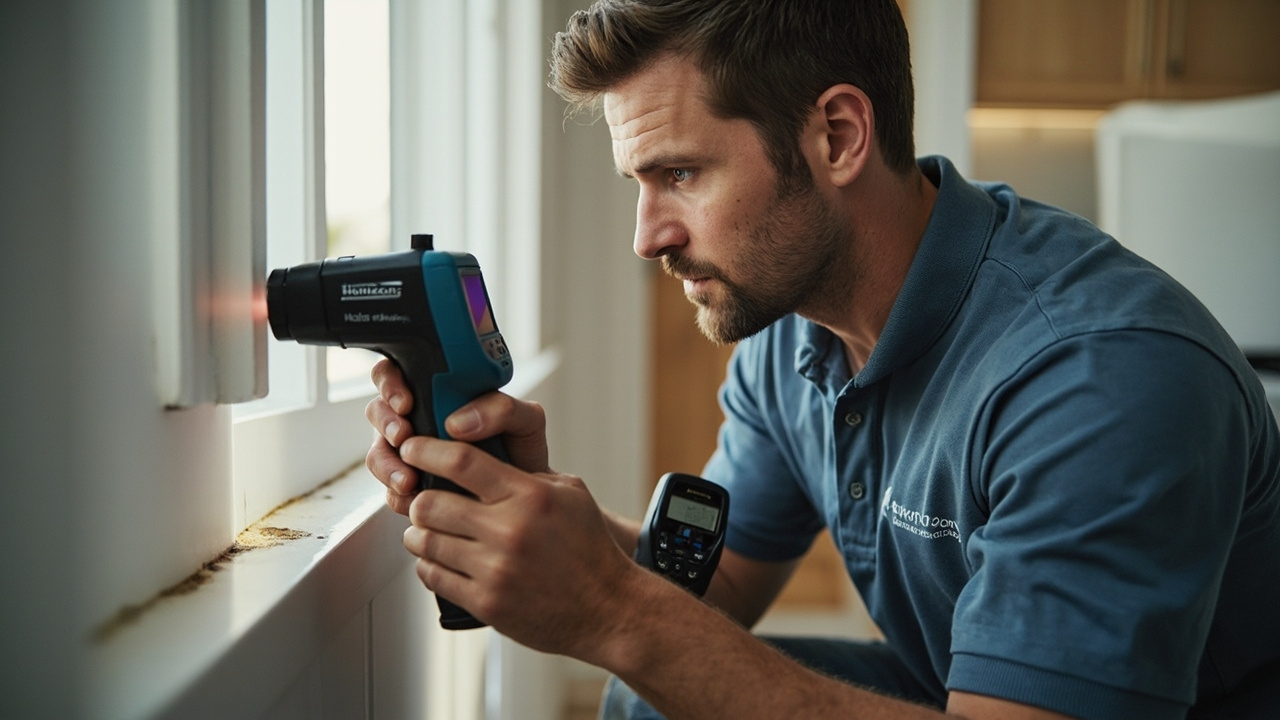
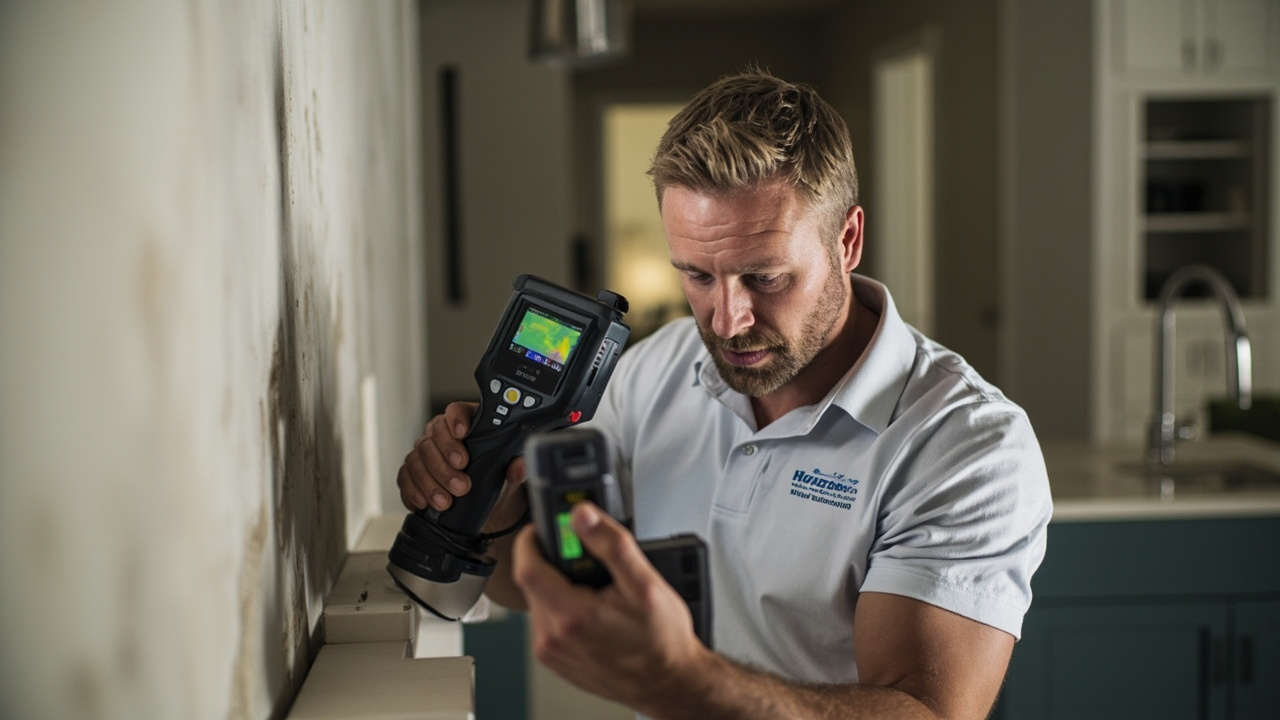
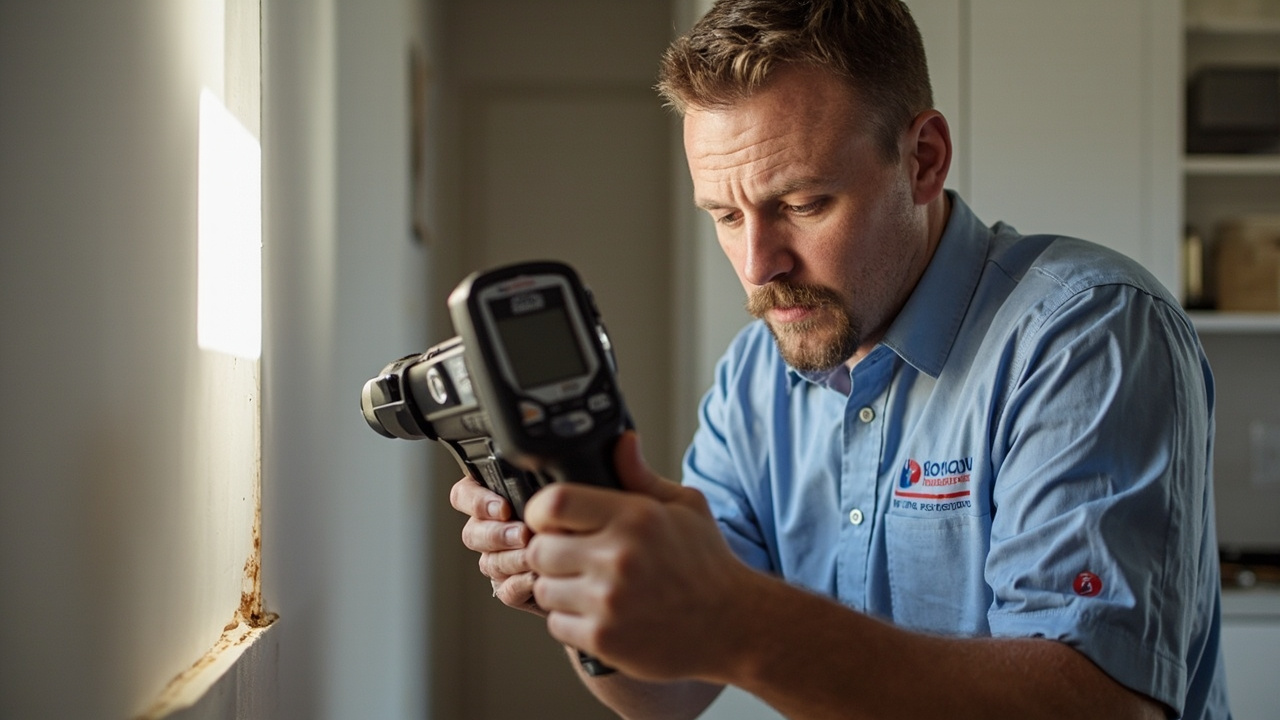
Finding trapped water requires technology that measures temperature differentials and moisture content in building materials. We use FLIR thermal imaging cameras that detect temperature variations as small as 0.1 degrees. Evaporating water creates cooling. Wet insulation shows up as cold spots on thermal scans. This reveals water pathways behind finished walls without cutting drywall.

We pair thermal imaging with pin-type and non-invasive moisture meters. Pin meters measure moisture content in wood, drywall, and insulation by reading electrical resistance between two probes. Non-invasive meters scan broad surface areas to map moisture patterns. We take readings at multiple depths to determine if moisture is surface level or deep within wall cavities.

Our technicians follow a systematic grid pattern when scanning your home. We start at the suspected source and trace moisture migration paths. Water travels downward through wall cavities and horizontally along floor joists. We document moisture levels with photos and diagrams showing exact locations and severity.

Locating concealed dampness in Richmond homes often uncovers multiple moisture sources. A roof leak stains attic sheathing. A leaking supply line saturates wall insulation. A failed bathroom seal allows water under tile. We map each moisture zone and determine the sequence for remediation.

The technology only works if the operator understands building science. Thermal cameras show temperature differences, not moisture. You must interpret what causes the temperature variation. Is it water evaporation, air leakage, or missing insulation? We correlate thermal data with moisture meter readings and visual inspection to confirm water presence.

This diagnostic approach eliminates guesswork. You know exactly where water exists, how much material is wet, and what repairs are needed before demolition begins.

Our Three-Stage Moisture Investigation Protocol

Hidden Moisture Detection in Richmond – Stop Unseen Water Damage Before It Destroys Your Home
01

Initial Assessment and Thermal Scan

We begin with a detailed interview about symptoms you have noticed. Then we perform a complete thermal scan of affected areas and adjacent spaces. The camera maps temperature variations across walls, ceilings, and floors. We photograph anomalies and note ambient temperature and humidity levels. This creates baseline data for comparison as we investigate further with moisture meters and visual inspection.
02

Moisture Meter Verification

Every cold spot identified in thermal scans gets tested with moisture meters. We take readings at multiple points within suspected zones and in dry areas for comparison. Pin meters confirm moisture content in wood framing and drywall. Non-invasive meters check moisture depth in concrete and masonry. We document all readings with location notes and measurements from reference points to create a detailed moisture map.
03

Source Tracing and Reporting

After mapping moisture patterns, we trace the water source. We inspect plumbing connections, roof penetrations, window flashing, and foundation cracks. We identify the entry point and the migration path. You receive a written report with thermal images, moisture readings, photos, and remediation recommendations. This documentation helps with insurance claims and gives contractors a clear scope of work for repairs.

Why Richmond Property Owners Trust Horizon Water Damage Restoration Richmond

We have investigated moisture intrusion in every Richmond neighborhood. We know how water behaves in 1920s brick homes in the Museum District and modern vinyl-sided houses in Short Pump. We understand how Richmond's building stock responds to our humid climate and shifting clay soils.

Our technicians train on IICRC standards for water damage inspection. We use commercial-grade equipment calibrated regularly for accuracy. This matters because insurance adjusters and contractors rely on our findings to make repair decisions. Inaccurate moisture readings lead to incomplete remediation and recurring mold growth.

We document everything. You receive thermal images with temperature scales, moisture meter readings with material types noted, and photos with measurements. This level of detail protects you if disputes arise with insurance carriers or contractors. It also creates a baseline for post-remediation verification.

Richmond homeowners call us when they need answers, not guesses. We do not sell remediation services during the inspection. Our job is finding moisture and identifying the source. You decide who performs the repairs. This independence keeps our findings objective and our recommendations trustworthy.

We have worked with Richmond's oldest homes and newest construction. We have traced water through brick veneer walls, stucco exteriors, and fiber cement siding. We have found moisture in crawl spaces with vapor barriers and conditioned basements with French drains. Experience with diverse building types helps us recognize moisture patterns quickly.

Local knowledge matters. We know which Richmond builders use proper flashing details and which cut corners. We know which neighborhoods have high water tables and poor drainage. This context helps us interpret what we find during moisture investigations.

What Happens When You Schedule a Moisture Detection Service

Response Time and Availability

We schedule non-emergency moisture inspections within 24 to 48 hours of your call. Most investigations take two to four hours depending on home size and the extent of suspected moisture intrusion. We work around your schedule, including evenings and weekends. Emergency situations where active water intrusion threatens immediate damage receive same-day response. You receive a phone call 30 minutes before arrival with technician name and estimated arrival time.

The Investigation Process

Our technician arrives with thermal imaging equipment, multiple moisture meters, a camera, and a tablet for documentation. We discuss your concerns and any symptoms you have noticed. Then we scan suspected areas and expand the investigation to adjacent spaces. We take moisture readings in wet zones and dry zones for comparison. We inspect potential water sources like plumbing, HVAC condensate lines, and exterior penetrations. We answer questions throughout the process and explain what we find in real time.

Documentation You Receive

You receive a written report within 24 hours. It includes thermal images with temperature data, moisture meter readings with material types and locations, photos of affected areas and potential sources, and a written summary explaining findings and recommended next steps. The report identifies which materials need removal, areas requiring monitoring, and the likely water source. This documentation supports insurance claims and gives contractors clear direction for remediation. We keep copies on file for your reference.

Post-Remediation Verification

After contractors complete drying and repairs, we offer follow-up moisture testing to verify successful remediation. This optional service documents that moisture levels have returned to normal ranges before you close walls or reinstall flooring. We compare new readings against baseline data from the initial investigation. This verification protects you from contractors who rush jobs or use inadequate drying equipment. It also provides peace of mind that hidden moisture will not cause future mold growth or material decay.

Frequently Asked Questions

You Have Questions,
We Have Answers

Why does my phone say moisture detected when there is no moisture? +

Your phone's moisture sensor can trigger false alarms from humidity, condensation, or residue in the charging port. Richmond's high humidity, especially during summer months, can cause sensors to react even without direct water contact. Sweat, steam from showers, or cleaning products can also trip the sensor. Try gently cleaning the port with a dry cotton swab and let it air dry in a low-humidity area. If the warning persists after several hours, the sensor may be malfunctioning and need professional repair.

Do moisture detectors really work? +

Professional moisture detectors are highly effective tools when used correctly. Infrared cameras and pin-type meters can identify hidden water intrusion behind walls, under floors, and in ceilings before visible damage appears. These tools measure moisture content in materials like drywall, wood, and concrete. Accuracy depends on the equipment quality and operator experience. Richmond homes with crawl spaces or older construction benefit from professional moisture detection, which can prevent mold growth and structural decay that common visual inspections miss.

How do I find out where my moisture is coming from? +

Start by checking common entry points like roof valleys, window seals, and foundation cracks. In Richmond, gutters clogged with fall leaves often cause water to overflow and seep into walls. Look for water stains, peeling paint, or musty odors. Check crawl spaces for standing water or damp insulation. However, moisture can travel through walls and appear far from the source. Professional moisture detection equipment uses thermal imaging and sensors to trace water back to its origin point, saving you time and preventing guesswork.

Is there a tool to detect moisture in walls? +

Pin-type moisture meters and non-invasive infrared cameras are the two main tools for detecting moisture in walls. Pin meters penetrate drywall to measure moisture content directly, while thermal cameras identify temperature differences that indicate wet areas without creating holes. Professional restoration companies use both methods together for accurate readings. These tools detect problems invisible to the eye, like slow leaks from plumbing or exterior water intrusion common in Richmond's older neighborhoods. You can rent basic meters, but professionals provide more accurate diagnostics.

How do I bypass the moisture detection? +

You should not bypass moisture detection warnings on phones or devices. The alert protects your charging port and internal components from corrosion and electrical damage. Forcing a charge with moisture present can destroy your device permanently. Instead, address the underlying cause. Use compressed air to remove water, let the device dry completely in a low-humidity area, or place it near a fan. If you need immediate charging, use wireless charging if your device supports it. Patience prevents expensive repairs.

Will the moisture detection go away on its own? +

Phone moisture detection warnings usually clear within one to three hours after the port dries completely. Richmond's humid climate can extend drying time, especially during summer. Place your device in a dry, air-conditioned room with good airflow. Avoid placing it in rice, which can introduce dust and debris into ports. If the warning persists beyond 24 hours despite dry conditions, the sensor may have malfunctioned or corrosion has occurred. At that point, professional phone repair becomes necessary to resolve the issue.

What can throw off a moisture meter? +

Moisture meters can give false readings from metal objects, high mineral content in materials, or temperature extremes. In Richmond homes, metal studs, pipes, or nails behind drywall can cause spikes. High salt content from road spray or coastal air can affect readings. Freshly applied paint or joint compound also registers as moisture until fully cured. Operator error, like improper calibration or pressing pins at wrong angles, creates inaccurate results. Professional technicians account for these variables and take multiple readings to confirm findings.

How long do moisture sensors last? +

Quality moisture sensors in professional equipment last five to ten years with proper maintenance and calibration. Consumer-grade sensors in phones or home devices may last three to five years before degrading. Exposure to extreme moisture, physical damage, or corrosion shortens lifespan. Regular calibration ensures accuracy over time. In Richmond's humid environment, sensors exposed to persistent moisture wear faster. Professional restoration companies maintain and replace sensors regularly to ensure accurate water damage detection. Home sensors should be tested periodically against known dry materials to verify function.

How do phones detect moisture? +

Phones use tiny electrodes in charging ports that measure electrical resistance. Water changes resistance levels, triggering the warning. The system detects moisture through conductivity differences between dry and wet conditions. Some phones use multiple sensors for accuracy. This protection prevents short circuits that damage internal components. Richmond's humid air can sometimes register on sensitive detectors, though most phones require actual liquid contact. The sensor monitors constantly when you attempt to charge, automatically blocking power delivery until resistance returns to normal dry levels.

Can mold grow in 50% humidity? +

Mold can grow at 50% humidity if other conditions align. Most mold species need 60% or higher, but some strains thrive at lower levels when organic material and warmth exist. Richmond homes with poor ventilation, especially in crawl spaces or bathrooms, can develop mold at 50% humidity if temperatures stay above 70 degrees. Damp surfaces, water-damaged materials, or condensation create localized high-humidity zones where mold colonizes. Controlling humidity below 50% and ensuring proper airflow prevents growth. Address any water intrusion immediately.

Richmond's Humidity and Historic Housing Stock Create Perfect Conditions for Hidden Moisture

Richmond averages 72 percent relative humidity in July and August. This moisture-saturated air condenses on cool surfaces inside wall cavities and crawl spaces. Older homes in Fan District and Church Hill lack vapor barriers in crawl spaces. Many have uninsulated rim joists where humid air contacts cool band boards. Water vapor migrates through porous brick and condenses inside wall cavities during summer months. Winter brings different problems. Warm indoor air escapes through gaps in building envelopes and condenses on cold roof sheathing in unconditioned attics. These seasonal moisture cycles create continuous dampness that standard visual inspection cannot detect.

Richmond's housing stock ranges from 1800s brick rowhouses to modern suburban construction. Each building type presents unique moisture investigation challenges. Balloon-framed Victorian homes allow water to travel from roof leaks straight down to basements through open wall cavities. Mid-century ranch homes often have cast iron drain pipes corroding behind finished walls. Modern houses use OSB sheathing that holds moisture longer than traditional plywood. We have investigated moisture problems in all these construction types across Richmond neighborhoods. This local experience helps us recognize moisture patterns specific to Richmond's architectural history and know where to look first when investigating concealed dampness.

Water Damage Restoration Services in The Richmond Area

Horizon Water Damage Restoration proudly serves the greater Richmond area and surrounding communities. Our strategic location allows us to respond quickly and efficiently to your water damage emergencies, no matter where you are. We are committed to being a local, reliable presence for our neighbors. View our service area on the map below to see how we can reach you and provide the swift, expert service you need.

Address:
Horizon Water Damage Restoration Richmond, 1840 W Broad St, Richmond, VA, 23220

Additional Services We Offer

Our news updates

Latest Articles & News from The Blogs

Identifying Slow Leaks in Flat Roofs Common Around Sandston Flat roofs in Sandston often develop slow leaks that property owners…

Identifying Slow Leaks in Flat Roofs Common Around Sandston

Identifying Slow Leaks in Flat Roofs Common Around Sandston Flat roofs in Sandston often develop slow leaks that property owners…

Simple Ways to Redirect Rainwater Away from Your Stratford Hills Foundation

Simple Ways to Redirect Rainwater Away from Your Stratford Hills Foundation Water pooling near your foundation in Stratford Hills can…

The Damage a Burst Washing Machine Hose Can Do in Just 30 Minutes

The Damage a Burst Washing Machine Hose Can Do in Just 30 Minutes A burst washing machine hose can release…

Contact Us

Call Horizon Water Damage Restoration Richmond at (804) 602-2644 right now. We will schedule your moisture investigation and find trapped water before mold spreads and repairs become catastrophic. Stop guessing where the moisture hides.