



Menu

Industrial Drying Services in Richmond | Minimize Downtime and Protect Your Commercial Assets

Fast-deployment industrial dehumidification services and commercial structural drying restore your facility to operational standards while protecting inventory, equipment, and business continuity across Richmond's commercial and industrial properties.

Slider Image 1
Slider Image 2
Slider Image 3
Slider Image 4
Slider Image 5
Slider Image 7
Slider Image 8
Slider Image 9
Slider Image 10
Slider Image 11

Why Richmond Facilities Need Rapid Industrial Drying Solutions

Richmond's position at the fall line of the James River creates a unique humidity profile that magnifies water damage in commercial facilities. The region's average relative humidity hovers near 70 percent year-round, creating conditions where standing water in warehouses, manufacturing plants, and distribution centers accelerates secondary damage exponentially.

Your facility operates on margins. Every hour of downtime costs revenue. When a pipe bursts in a cold storage facility in Shockoe Bottom, when flooding hits a production floor near the Port of Richmond, or when a sprinkler malfunction soaks inventory in a Midlothian warehouse, the clock starts immediately. Water migrates through concrete slabs, steel framing, and insulation systems at predictable rates. Without immediate commercial structural drying intervention, you face equipment corrosion, inventory loss, mold proliferation, and potential code violations.

Richmond's industrial zones, from the Deepwater Terminal to the manufacturing corridor along I-95, house facilities with complex HVAC systems, concrete tilt-up construction, and specialized equipment that require targeted industrial dehumidification services. Generic residential extraction methods cannot handle the cubic footage, airflow requirements, or technical specifications these environments demand.

The clay soils common throughout Richmond also create foundation stability issues that complicate commercial water drying services. Water intrusion through slab joints or failed membrane systems requires both surface extraction and sub-slab drying protocols that most restoration providers lack the equipment to execute properly.

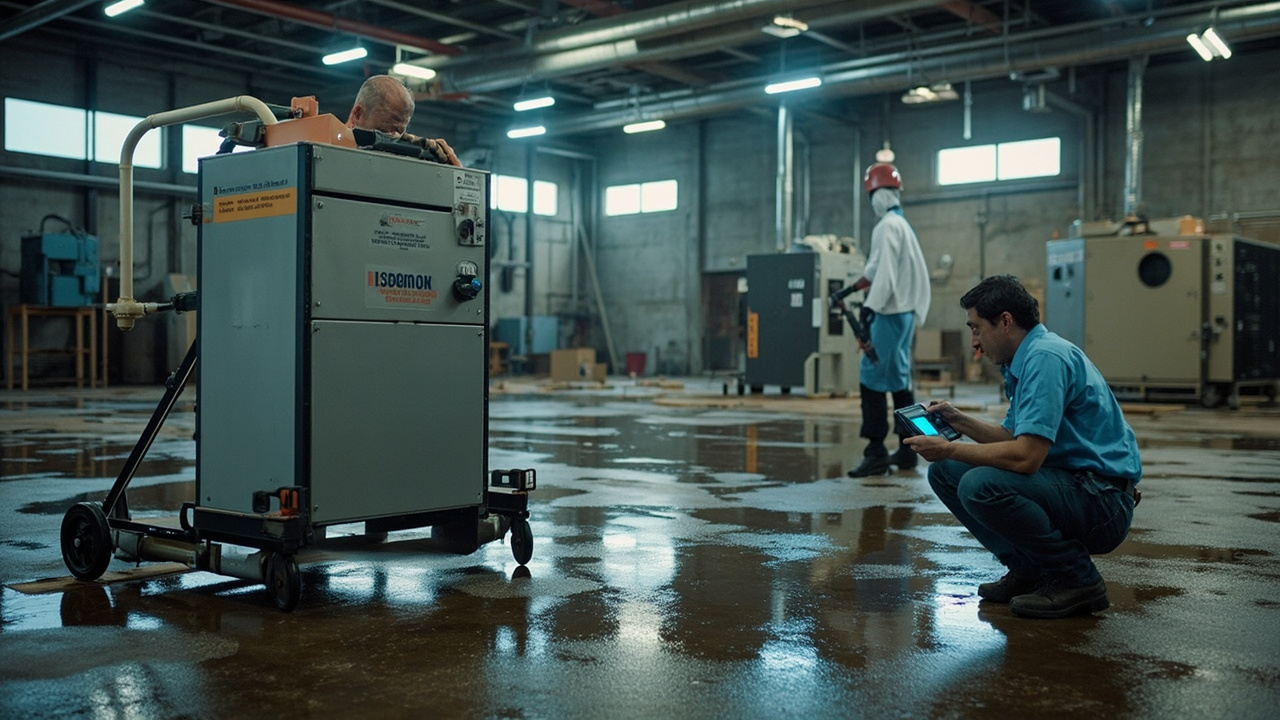
Time compression matters in industrial settings. Every production hour lost equals lost contracts, missed shipments, and compromised client relationships. Industrial structural drying deploys commercial-grade desiccant systems, axial air movers, and trailer-mounted dehumidifiers that residential equipment cannot match.

Why Richmond Facilities Need Rapid Industrial Drying Solutions
How Industrial-Scale Water Extraction Protects Commercial Operations

How Industrial-Scale Water Extraction Protects Commercial Operations

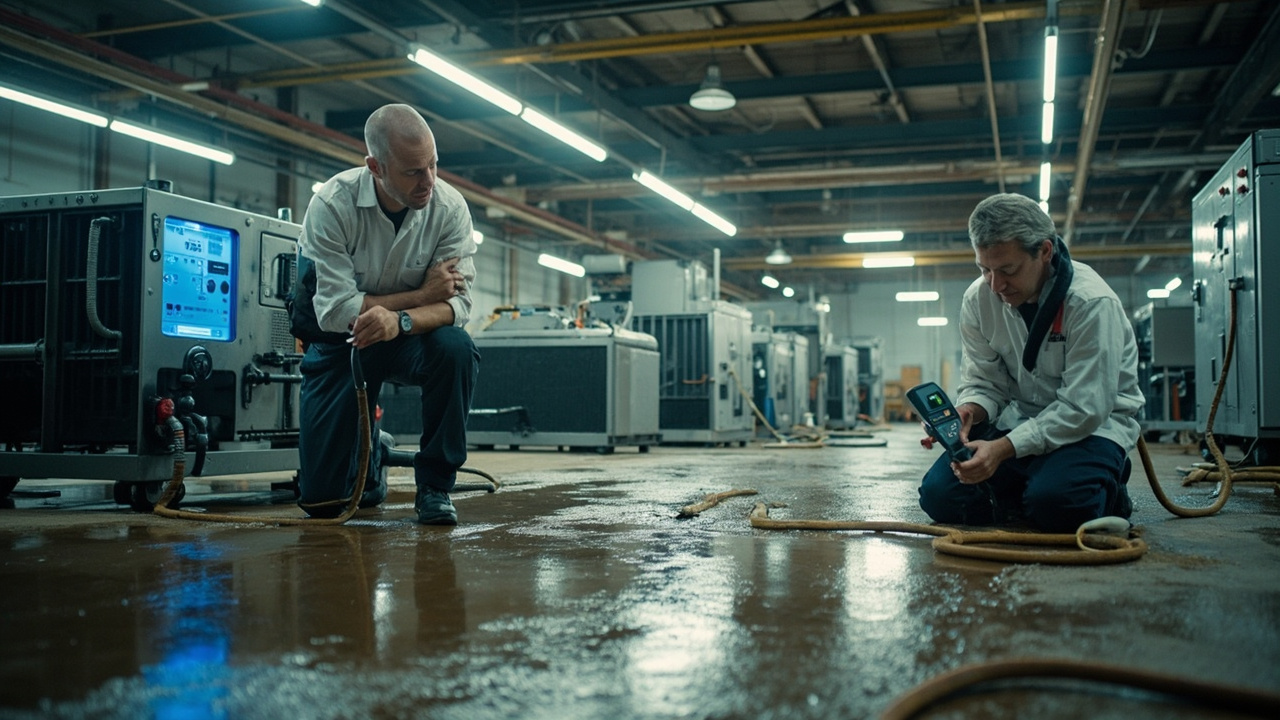
Horizon Water Damage Restoration Richmond deploys commercial drying solutions engineered for the scale and complexity of industrial facilities. We use trailer-mounted desiccant dehumidifiers capable of processing 3,000 cubic feet per minute, extracting moisture from environments that standard refrigerant units cannot touch.

Our approach begins with psychrometric mapping. We measure temperature, relative humidity, and dew point across your facility to create a drying chamber that optimizes vapor pressure gradients. This is not guesswork. We calculate grain depression rates and adjust equipment placement based on thermal imaging that reveals moisture migration patterns inside walls, under flooring systems, and within insulation assemblies.

For concrete slab drying, we deploy injecti-dry systems that create negative pressure zones beneath the slab surface. This method pulls moisture from the concrete matrix itself, preventing efflorescence, delamination, and the structural weakening that occurs when water remains trapped in porous materials.

Steel structures require different protocols. We position high-velocity air movers to create laminar airflow across steel members, preventing flash rust and corrosion that develops within 24 hours of water exposure. For facilities with sensitive electronics or clean room environments, we use HEPA-filtered air scrubbers running continuously during the drying process to maintain air quality standards.

Documentation drives our process. We provide daily moisture readings, equipment logs, and psychrometric charts that satisfy insurance adjusters and risk management teams. You receive data that proves the facility has returned to pre-loss moisture levels, meeting the IICRC S500 standard for commercial structural drying.

We coordinate with your operations team to section off drying zones, allowing partial facility operation during restoration. This phased approach minimizes revenue loss while ensuring thorough moisture removal.

The Industrial Drying Deployment Process

Industrial Drying Services in Richmond | Minimize Downtime and Protect Your Commercial Assets
01

Emergency Assessment and Containment

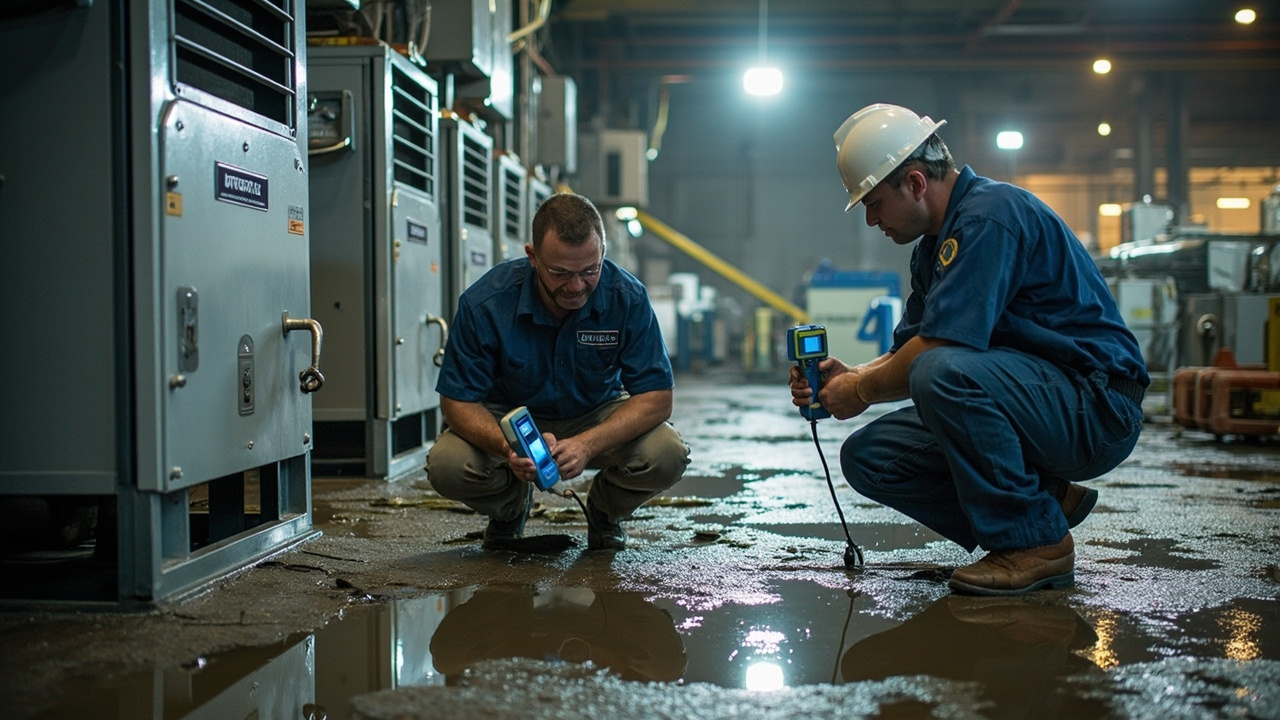
Our team arrives with thermal imaging cameras and moisture meters to map the full extent of water intrusion across your facility. We identify the category and class of water damage, assess structural compromise, and establish containment zones using vapor barriers and negative air machines. You receive an immediate scope document outlining equipment requirements, projected drying time, and operational impact areas. This assessment typically completes within two hours of arrival.
02

Equipment Deployment and Monitoring

We position commercial-grade dehumidifiers, air movers, and extraction equipment based on the psychrometric data collected during assessment. Our technicians establish a drying chamber that optimizes evaporation rates while maintaining facility temperatures within operational parameters. We install remote monitoring systems that track moisture levels in real time, adjusting equipment as conditions change. Daily reports document progress against the drying goal, providing transparent accountability for insurance documentation.
03

Verification and Facility Release

Final verification uses non-invasive moisture detection and destructive testing when required to confirm materials have returned to dry standards. We provide a certificate of completion with comprehensive moisture readings, equipment removal documentation, and recommendations for preventing future water intrusion. Your facility receives clearance based on industry standards, protecting you from liability issues related to incomplete drying. The verification process ensures your insurance claim closes properly and your operations resume without hidden moisture issues.

Why Richmond Facilities Trust Local Industrial Drying Expertise

Horizon Water Damage Restoration Richmond operates with equipment staged locally, eliminating the mobilization delays that plague national franchise operations. When a water emergency hits your facility, our trucks deploy from Richmond with the commercial-grade equipment already loaded. This proximity matters when every hour of delay extends your downtime.

We understand the regulatory environment Richmond facilities operate within. The City of Richmond Fire Marshal enforces strict requirements for post-water damage inspections in commercial properties, particularly those in flood zones near the James River or in historically designated districts like Shockoe Slip. Our documentation meets these compliance standards without requiring callbacks or re-inspection.

Richmond's industrial properties often feature construction methods specific to the region. The concrete tilt-up warehouses common in the White Oak Technology Park require different drying protocols than the older masonry structures found in Manchester's industrial corridor. We adapt our commercial water drying services to the building envelope we encounter, not to a one-size-fits-all corporate playbook.

Our relationships with Richmond's commercial insurance adjusters and third-party administrators expedite your claim process. We speak the documentation language they require, providing psychrometric charts, moisture logs, and equipment manifests that satisfy their technical review without back-and-forth delays.

For facilities operating under FDA, USDA, or ISO certification requirements, we provide the detailed documentation your quality management system demands. This includes chain of custody for affected materials, sanitization protocols, and verification testing that proves your facility maintains its operational certifications post-restoration.

Local expertise means we know which mechanical contractors service your building systems, which industrial suppliers can provide replacement materials quickly, and which structural engineers Richmond's building department accepts for load calculations if structural drying reveals compromise.

What Your Business Should Expect From Industrial Drying Services

Response Time and Equipment Mobilization

Our emergency response team deploys to Richmond facilities within 90 minutes of your call. We arrive with commercial extraction units, industrial dehumidifiers, and thermal imaging equipment already staged on our trucks. For large-scale incidents requiring trailer-mounted desiccant systems, we mobilize additional equipment within four hours. This rapid deployment minimizes the water migration window, reducing overall drying time and limiting secondary damage to inventory and building systems. You receive a preliminary assessment and equipment deployment plan before our team leaves your facility on the initial visit.

Technical Assessment and Drying Protocol

We conduct psychrometric analysis across your facility to establish baseline moisture conditions and calculate the specific humidity removal capacity required. This assessment identifies hidden moisture in wall cavities, under flooring systems, and within structural assemblies that visual inspection misses. You receive a detailed drying plan that specifies equipment placement, projected drying duration, and daily moisture reduction targets. Our approach follows ANSI/IICRC S500 protocols, ensuring your facility meets industry standards for commercial structural drying. The assessment also identifies potential microbial amplification risks, allowing early intervention before mold growth begins.

Operational Continuity During Restoration

We design drying zones that allow partial facility operation during the restoration process. This phased approach isolates affected areas using containment barriers and negative air pressure, preventing cross-contamination to operational sections. For facilities that cannot sustain any downtime, we coordinate after-hours equipment placement and monitoring to minimize disruption. Our team works with your operations managers to establish safe pathways, maintain required environmental controls, and protect sensitive equipment from drying equipment airflow. The result is a restoration process that balances thoroughness with business continuity, reducing revenue loss while ensuring complete moisture removal.

Documentation and Compliance Verification

You receive comprehensive documentation throughout the drying process, including daily moisture readings, psychrometric charts, equipment logs, and photographic evidence. This documentation package satisfies insurance carrier requirements, supports your business interruption claim, and provides the technical verification your risk management team needs. Upon completion, we provide a certificate of drying completion with final moisture readings that confirm materials have returned to industry-standard dry conditions. For facilities operating under regulatory oversight, we supply the additional documentation required to maintain FDA, USDA, ISO, or other certification compliance. This paper trail protects you from liability issues and ensures your facility can resume full operations without regulatory complications.

Frequently Asked Questions

You Have Questions,
We Have Answers

Richmond's Humidity and Flood Zone Impact on Industrial Facility Drying

Richmond's location at the fall line creates persistent humidity challenges that accelerate drying timelines in industrial facilities. The James River's influence keeps relative humidity elevated even during winter months, requiring desiccant dehumidification systems rather than standard refrigerant units for effective moisture removal. Facilities in the Shockoe Valley flood zone face additional complications from groundwater intrusion through concrete slabs, demanding sub-slab injection drying protocols. The clay soils throughout Richmond create hydrostatic pressure against foundation walls during heavy rain events, pushing moisture into basement and ground-floor spaces that standard extraction cannot address properly.

Richmond's commercial building stock includes historic industrial structures in Manchester and Shockoe Bottom that require specialized drying approaches to preserve masonry integrity while removing moisture effectively. The City of Richmond enforces strict requirements for commercial properties impacted by water damage, particularly in designated historic districts where building modifications require preservation office approval. Our team maintains relationships with Richmond's commercial insurance adjusters and understands the documentation standards they require for industrial drying claims. This local knowledge streamlines your claim process and ensures restoration work meets both city code requirements and insurance carrier expectations for commercial structural drying projects.

Water Damage Restoration Services in The Richmond Area

Horizon Water Damage Restoration proudly serves the greater Richmond area and surrounding communities. Our strategic location allows us to respond quickly and efficiently to your water damage emergencies, no matter where you are. We are committed to being a local, reliable presence for our neighbors. View our service area on the map below to see how we can reach you and provide the swift, expert service you need.

Address:
Horizon Water Damage Restoration Richmond, 1840 W Broad St, Richmond, VA, 23220

Additional Services We Offer

Our news updates

Latest Articles & News from The Blogs

Identifying Slow Leaks in Flat Roofs Common Around Sandston Flat roofs in Sandston often develop slow leaks that property owners…

Identifying Slow Leaks in Flat Roofs Common Around Sandston

Identifying Slow Leaks in Flat Roofs Common Around Sandston Flat roofs in Sandston often develop slow leaks that property owners…

Simple Ways to Redirect Rainwater Away from Your Stratford Hills Foundation

Simple Ways to Redirect Rainwater Away from Your Stratford Hills Foundation Water pooling near your foundation in Stratford Hills can…

The Damage a Burst Washing Machine Hose Can Do in Just 30 Minutes

The Damage a Burst Washing Machine Hose Can Do in Just 30 Minutes A burst washing machine hose can release…

Contact Us

Your facility cannot afford extended downtime from incomplete drying protocols. Call Horizon Water Damage Restoration Richmond at (804) 602-2644 now for immediate industrial drying services deployment. Our commercial-grade equipment mobilizes within 90 minutes to minimize business interruption and protect your operational assets.