
Saving Original Hardwood Floors After a Leak in The Fan or Ginter Park
Water damage to original hardwood floors in Richmond’s historic neighborhoods requires immediate attention. The Fan and Ginter Park feature homes with century-old oak and heart pine flooring that can often be saved with proper restoration techniques. Time is critical – mold can begin growing within 24-48 hours in Richmond’s humid climate, making fast professional intervention essential for preserving these irreplaceable architectural elements. How to Get Rapid Water Extraction in the Museum District.
Emergency Response: The First 24 Hours
Quick action determines whether your floors can be saved. Richmond’s clay soil and high water table in low-lying areas near the James River mean water spreads rapidly through historic homes. Turn off the water source immediately and remove standing water using mops, towels, or a wet vacuum. Do not use fans directly on wet floors as this can cause cupping. Open windows only if outdoor humidity is lower than indoor levels – Richmond’s summer humidity often exceeds 80%, making natural drying ineffective. 24/7 Emergency Water Removal Services in Richmond VA.
Safety comes first. Check for electrical hazards before entering flooded areas. The Fan’s older electrical systems may have exposed wiring in crawl spaces. Wear rubber boots and gloves. If water reached electrical outlets or appliances, stay out until a professional assesses the situation. Document everything with photos for insurance purposes – Richmond adjusters need clear evidence of pre-existing conditions versus new damage. Who to Call Right Now for a Flooded Basement in Short Pump.
Identifying Water Damage in Hardwood Floors
Hardwood reacts to moisture through cellular expansion. When wood absorbs water, cells swell and create visible distortion. Cupping occurs when edges of boards rise higher than centers – the bottom of boards absorbs more moisture from concrete subfloors or crawl spaces. Crowning is the opposite, with centers rising above edges, often from surface moisture or improper previous repairs. EPA Mold Guidelines.
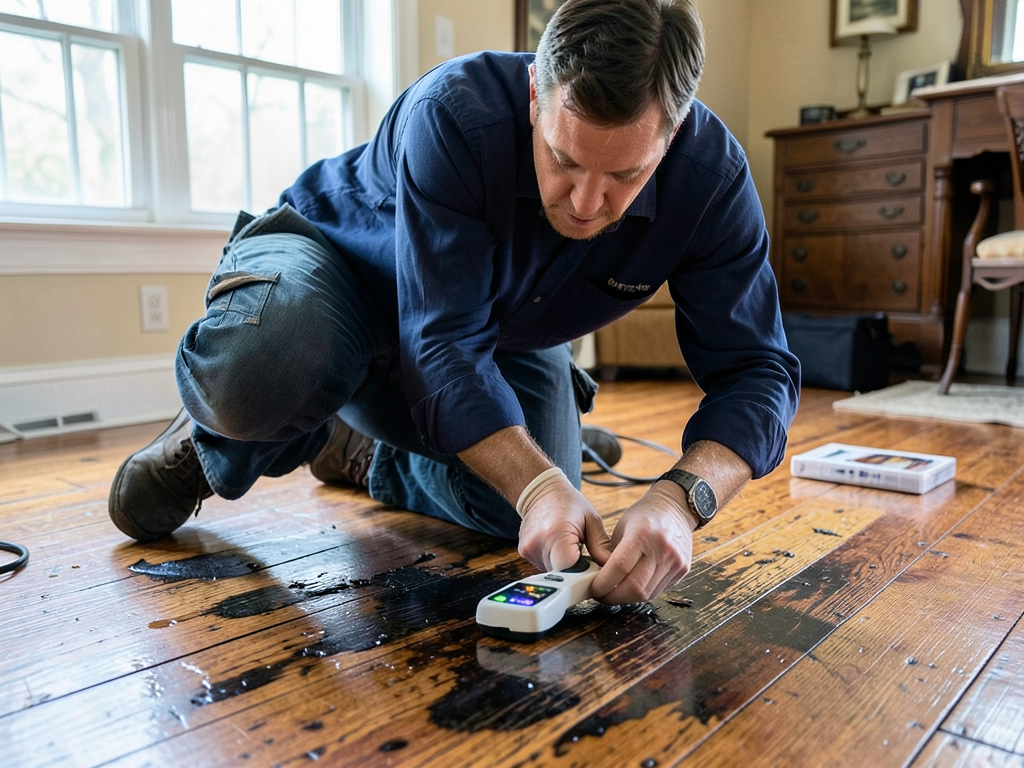
Check moisture content using a pin-type meter. Readings above 12% indicate active moisture problems. Richmond’s normal equilibrium moisture content for hardwood is 6-9%, so readings above this range signal water intrusion. Press on boards – if they feel soft or spongy, the damage has compromised structural integrity. Warped boards that spring back when pressed may be salvageable; those that stay compressed need replacement. Commercial Water Damage Restoration for Downtown Richmond Businesses.
Black staining indicates prolonged moisture exposure and potential mold growth. Richmond’s warm, humid summers create perfect conditions for mold colonization on wet wood surfaces within 48-72 hours. Musty odors confirm active microbial growth. White, fuzzy growth on board surfaces indicates early-stage mold that requires immediate professional remediation following IICRC S520 standards. IICRC S500 Standards.
Professional Restoration Process for Richmond Homes
Professional restoration follows a systematic approach specific to Richmond’s climate and building materials. First, technicians map moisture using infrared cameras and moisture meters to identify affected areas beyond visible damage. The Fan’s row houses often have shared walls where water travels between units, requiring comprehensive assessment.. Read more about The Real Cost of Delaying Water Damage Repairs for Just 24 Hours.
Water extraction uses truck-mounted extraction units capable of removing water from between boards and from subfloor cavities. Standard wet vacuums cannot reach moisture trapped in tongue-and-groove joints common in historic flooring. Extraction continues until moisture meters show consistent readings below 12% across all affected areas.. Read more about Fast Water Damage Restoration and Drying in The Fan.
Specialty drying equipment includes floor mat systems that apply negative pressure to draw moisture from between boards without causing additional warping. Injectidry systems force dry air through small holes drilled in baseboards to reach subfloor cavities – crucial for The Fan’s homes built on crawl spaces with poor ventilation. LGR (Low Grain Refrigerant) dehumidifiers remove moisture from the air at rates of 20-30 gallons per day, essential for Richmond’s high ambient humidity.. Read more about Essential Steps to Take Before the Water Damage Adjuster Arrives.
Moisture monitoring continues for 3-5 days minimum. Technicians take readings twice daily from multiple locations to track drying progress. Subfloor moisture must reach 6-9% before refinishing can begin. Rushing this process causes finish failure and future warping. Richmond’s clay soil maintains higher moisture levels than surrounding areas, often extending drying times by 24-48 hours. Sump Pump Failure Cleanup and Repair in Bon Air.
Subfloor Considerations in Historic Richmond Construction
Historic homes in The Fan and Ginter Park often have plank subfloors rather than modern plywood. These 1×6 pine boards absorb and release moisture differently than engineered products. Water trapped between hardwood and plank subfloors creates perfect conditions for rot and mold growth. Subfloor moisture content must reach 12% or below before hardwood refinishing can proceed.
Crawl space access in The Fan’s narrow lots presents unique challenges. Technicians use compact equipment and flexible ducting to reach confined spaces. High humidity in crawl spaces – often 70-80% year-round – requires continuous dehumidification during restoration. Without addressing crawl space moisture, floors will cup again within months of restoration.
Foundation types affect drying strategies. Ginter Park’s homes on raised foundations allow better subfloor access than The Fan’s homes on concrete slabs or tight crawl spaces. Slab homes require injection drying through existing floor vents or small access holes. Each foundation type requires specific equipment configurations to achieve proper drying without causing additional damage.
Mold Prevention and Treatment
Mold prevention starts with rapid moisture removal. Richmond’s climate provides ideal conditions for mold growth – temperatures between 70-90°F and humidity above 60%. Once moisture content drops below 16%, active mold growth stops, but dormant spores remain viable. Professional antimicrobial treatment using EPA-registered products prevents regrowth during the drying process.
Surface mold on hardwood responds to HEPA vacuuming followed by damp wiping with antimicrobial solution. Deep mold penetration into board cells requires sanding to remove affected wood layers. Test cuts determine how deep mold has spread – often 1/32 to 1/16 inch into board surfaces. Sanding beyond this depth removes too much material, requiring board replacement.
Air quality monitoring ensures safe conditions before refinishing. Air scrubbers with HEPA filtration run continuously during restoration, removing 99.97% of airborne particles. Final air quality testing confirms mold spore counts below 500 spores per cubic meter – Richmond’s standard for safe occupancy. Without this testing, refinishing over active mold colonies causes finish failure and health hazards.
Sanding and Refinishing Process
Refinishing begins only after moisture content stabilizes below 9% for 48 hours. Richmond’s humidity requires climate-controlled conditions during sanding – open windows allow humid air to rehydrate wood, causing immediate cupping. Industrial air filtration systems remove sanding dust, which can be explosive in confined spaces common in The Fan’s older homes.
Professional sanding uses progressively finer grits – typically starting at 36-grit for cupped floors, progressing through 50, 80, and finishing at 100-grit. Each pass removes 1/32 inch of material. Severely cupped floors may require 1/4 inch removal, limiting the number of future refinishing cycles. Historic floors often have only 1-2 sandings left before reaching nail heads.
Stain selection affects final appearance and durability. Oil-based stains penetrate deeper but require 24-hour drying time between coats – challenging in Richmond’s humidity. Water-based stains dry faster but may not achieve the rich tones desired in historic homes. Pre-stain conditioners prevent blotchiness in heart pine and oak, common in The Fan’s pre-1940s construction.
Finish selection impacts maintenance and longevity. Oil-based polyurethane provides amber tones preferred in historic homes but yellows over time. Water-based finishes maintain wood’s natural color but require more coats for equivalent durability. Commercial-grade finishes with aluminum oxide additives provide superior scratch resistance for homes with pets or children.
Cost-Benefit Analysis: Restore vs Replace
Restoration costs typically range from $3-8 per square foot in Richmond, depending on damage extent and wood species. Replacement costs average $8-15 per square foot for solid hardwood matching existing flooring. For homes in The Fan’s historic district, restoration often proves more economical when factoring in architectural review board requirements for exterior modifications during replacement.
Age affects restoration viability. Floors over 100 years old may have limited material remaining for sanding – often just 1/8 inch above tongue-and-groove joints. These floors can be screened and recoated rather than fully sanded, reducing costs by 40-50% while extending floor life 5-7 years. This approach preserves historic character while providing adequate protection.
Insurance coverage varies significantly. Standard policies cover sudden water damage from burst pipes but exclude gradual damage from foundation leaks or poor maintenance. Richmond homeowners should document water source and timing carefully – adjusters distinguish between covered and excluded damage based on these factors. Professional restoration companies provide detailed documentation supporting insurance claims.
Long-term value considerations favor restoration in historic districts. Original hardwood floors contribute significantly to property values in The Fan and Ginter Park. Replacement with modern flooring, even high-quality products, reduces historic authenticity and market appeal. Restoration maintains both structural integrity and historical accuracy, preserving investment value.. Read more about Restoring Historical Plaster Walls in Church Hill After a Pipe Burst.
Preventative Measures for Future Protection
Preventative maintenance prevents costly future restoration. Richmond’s freeze-thaw cycles cause pipe expansion and contraction, leading to joint failures. Annual plumbing inspections identify vulnerable connections before leaks occur. Water alarm systems provide early warning – crucial for The Fan’s homes where water spreads rapidly through shared walls and crawl spaces.. Read more about Managing Outdated Plumbing Issues in Historic Jackson Ward Homes.
Proper drainage protects foundations and subfloors. Richmond’s clay soil retains water, creating hydrostatic pressure against foundation walls. Grade soil away from foundations at 1/4 inch per foot minimum slope. Extend downspouts 6+ feet from foundations to prevent water accumulation near crawl space vents. Clean gutters twice yearly – spring and fall – to prevent overflow during heavy rains.
Humidity control prevents moisture-related damage. Richmond summer humidity often exceeds 85%, causing condensation on cool surfaces including hardwood floors over crawl spaces. Dehumidifiers in crawl spaces maintain 45-50% relative humidity, preventing moisture migration into flooring. Smart humidity monitors alert homeowners to dangerous conditions before damage occurs.. Read more about How Smart Leak Detectors Can Save Your Forest Hill Home from a Major Disaster.
Regular floor maintenance extends restoration life. Clean floors with pH-neutral cleaners specifically formulated for hardwood – avoid vinegar or ammonia which damage finishes. Place felt pads under furniture legs to prevent scratches that allow moisture penetration. Reapply finish coats every 3-5 years in high-traffic areas to maintain moisture resistance.
Why Choose a Local Richmond Specialist
Local expertise matters for historic home restoration. Richmond’s climate, building materials, and architectural styles require specific knowledge unavailable to national franchises. The Fan’s row houses built between 1900-1950 feature construction methods and materials no longer used – understanding these nuances prevents restoration mistakes that damage irreplaceable flooring.
Response time proves critical in water damage scenarios. Richmond’s traffic patterns and neighborhood layouts affect arrival times. Local companies understand optimal routes from different parts of the city to The Fan and Ginter Park. 24/7 availability means technicians arrive within 60 minutes of emergency calls, maximizing salvage potential.
Insurance relationships streamline claims processes. Local restoration companies maintain relationships with Richmond insurance adjusters, facilitating faster approvals and payments. Detailed documentation meets Virginia insurance requirements, preventing claim denials based on insufficient evidence. Direct insurance billing eliminates out-of-pocket expenses during stressful situations.
Community reputation reflects quality and reliability. Richmond homeowners rely on word-of-mouth recommendations for restoration services. Local companies depend on community trust for business survival, ensuring accountability and quality workmanship. Online reviews from Richmond neighbors provide honest assessments of company performance and customer service.
Frequently Asked Questions
How long does hardwood floor restoration take in Richmond’s climate?
Complete restoration typically requires 5-7 days minimum. Drying alone takes 3-5 days due to Richmond’s high humidity. Additional time includes assessment, extraction, antimicrobial treatment, and final refinishing. Rush processes cause finish failure and future warping.
Can all water-damaged hardwood floors be saved?
No. Severely warped boards, black mold penetration deeper than 1/16 inch, or soft, spongy wood cannot be restored. Replacement becomes necessary when structural integrity is compromised. Professional assessment determines salvageability based on moisture content, wood species, and damage extent.
Will insurance cover hardwood floor restoration?
Coverage depends on damage source. Sudden, accidental damage from burst pipes is typically covered. Gradual damage from foundation leaks or poor maintenance is usually excluded. Document water source and timing carefully. Professional restoration companies provide detailed documentation supporting insurance claims.
How can I prevent future water damage to my hardwood floors?
Install water alarms near potential leak sources. Maintain proper drainage away from foundations. Control crawl space humidity with dehumidifiers. Inspect plumbing annually for vulnerable connections. Address roof leaks immediately. These preventative measures cost far less than restoration.
Conclusion
Water-damaged hardwood floors in Richmond’s historic homes require immediate professional attention. The Fan and Ginter Park feature irreplaceable architectural elements that respond to moisture differently than modern flooring. Quick response, proper drying techniques, and professional restoration can save floors that would otherwise require expensive replacement. Richmond’s climate and building materials demand specific expertise unavailable from national franchises.
Don’t wait until it’s too late. Call (804) 602-2644 today to schedule your inspection. Our Richmond-based technicians arrive within 60 minutes, 24/7, ready to save your historic hardwood floors. Pick up the phone and call (804) 602-2644 before the next storm hits – your irreplaceable floors deserve immediate professional care.
You may also find this helpful. Salvaging Wet Carpeting and Padding in Your Midlothian Home.
{
“@context”: “https://schema.org”,
“@type”: “BlogPosting”,
“headline”: “Saving Original Hardwood Floors After a Leak in The Fan or Ginter Park”,
“description”: “Discover how to save water-damaged hardwood floors in Richmond’s historic homes. Learn about cupping, drying techniques, and restoration for The Fan and Ginter Park.”,
“wordCount”: 2131,
“datePublished”: “2026-03-04T16:43:00.000Z”,
“dateModified”: “2026-03-04T16:43:00.000Z”,
“inLanguage”: “en-US”,
“mainEntityOfPage”: {
“@type”: “WebPage”,
“@id”: “https://horizonwaterdamagerestorationrichmond.com”
},
“publisher”: {
“@type”: “LocalBusiness”,
“name”: “Horizon Water Damage Restoration Richmond”,
“url”: “https://horizonwaterdamagerestorationrichmond.com”
},
“author”: {
“@type”: “Organization”,
“name”: “Horizon Water Damage Restoration Richmond”,
“url”: “https://horizonwaterdamagerestorationrichmond.com”
},
“image”: {
“@type”: “ImageObject”,
“url”: “https://horizonwaterdamagerestorationrichmond.com/wp-content/uploads/2026/03/saving-original-hardwood-floors-after-a-leak-in-th-1.png”
}
}
{
“@context”: “https://schema.org”,
“@type”: “LocalBusiness”,
“name”: “Horizon Water Damage Restoration Richmond”,
“url”: “https://horizonwaterdamagerestorationrichmond.com”,
“address”: {
“@type”: “PostalAddress”,
“addressLocality”: “Richmond”
},
“areaServed”: {
“@type”: “City”,
“name”: “Richmond”
}
}
{
“@context”: “https://schema.org”,
“@type”: “FAQPage”,
“mainEntity”: [
{
“@type”: “Question”,
“name”: “How long does hardwood floor restoration take in Richmond’s climate?”,
“acceptedAnswer”: {
“@type”: “Answer”,
“text”: “Complete restoration typically requires 5-7 days minimum. Drying alone takes 3-5 days due to Richmond’s high humidity. Additional time includes assessment, extraction, antimicrobial treatment, and final refinishing. Rush processes cause finish failure and future warping.”
}
},
{
“@type”: “Question”,
“name”: “Can all water-damaged hardwood floors be saved?”,
“acceptedAnswer”: {
“@type”: “Answer”,
“text”: “No. Severely warped boards, black mold penetration deeper than 1/16 inch, or soft, spongy wood cannot be restored. Replacement becomes necessary when structural integrity is compromised. Professional assessment determines salvageability based on moisture content, wood species, and damage extent.”
}
},
{
“@type”: “Question”,
“name”: “Will insurance cover hardwood floor restoration?”,
“acceptedAnswer”: {
“@type”: “Answer”,
“text”: “Coverage depends on damage source. Sudden, accidental damage from burst pipes is typically covered. Gradual damage from foundation leaks or poor maintenance is usually excluded. Document water source and timing carefully. Professional restoration companies provide detailed documentation supporting insurance claims.”
}
},
{
“@type”: “Question”,
“name”: “How can I prevent future water damage to my hardwood floors?”,
“acceptedAnswer”: {
“@type”: “Answer”,
“text”: “Install water alarms near potential leak sources. Maintain proper drainage away from foundations. Control crawl space humidity with dehumidifiers. Inspect plumbing annually for vulnerable connections. Address roof leaks immediately. These preventative measures cost far less than restoration.”
}
}
]
}
{
“@context”: “https://schema.org”,
“@type”: “BreadcrumbList”,
“itemListElement”: [
{
“@type”: “ListItem”,
“position”: 1,
“name”: “Home”,
“item”: “https://horizonwaterdamagerestorationrichmond.com”
},
{
“@type”: “ListItem”,
“position”: 2,
“name”: “Blog”,
“item”: “https://horizonwaterdamagerestorationrichmond.com/blog”
},
{
“@type”: “ListItem”,
“position”: 3,
“name”: “Saving Original Hardwood Floors After a Leak in The Fan or Ginter Park”
}
]
}
{
“@context”: “https://schema.org”,
“@type”: “Service”,
“serviceType”: “Water Damage Restoration”,
“provider”: {
“@type”: “LocalBusiness”,
“name”: “Horizon Water Damage Restoration Richmond”,
“url”: “https://horizonwaterdamagerestorationrichmond.com”
},
“areaServed”: {
“@type”: “City”,
“name”: “Richmond”
},
“description”: “Discover how to save water-damaged hardwood floors in Richmond’s historic homes. Learn about cupping, drying techniques, and restoration for The Fan and Ginter Park.”
}